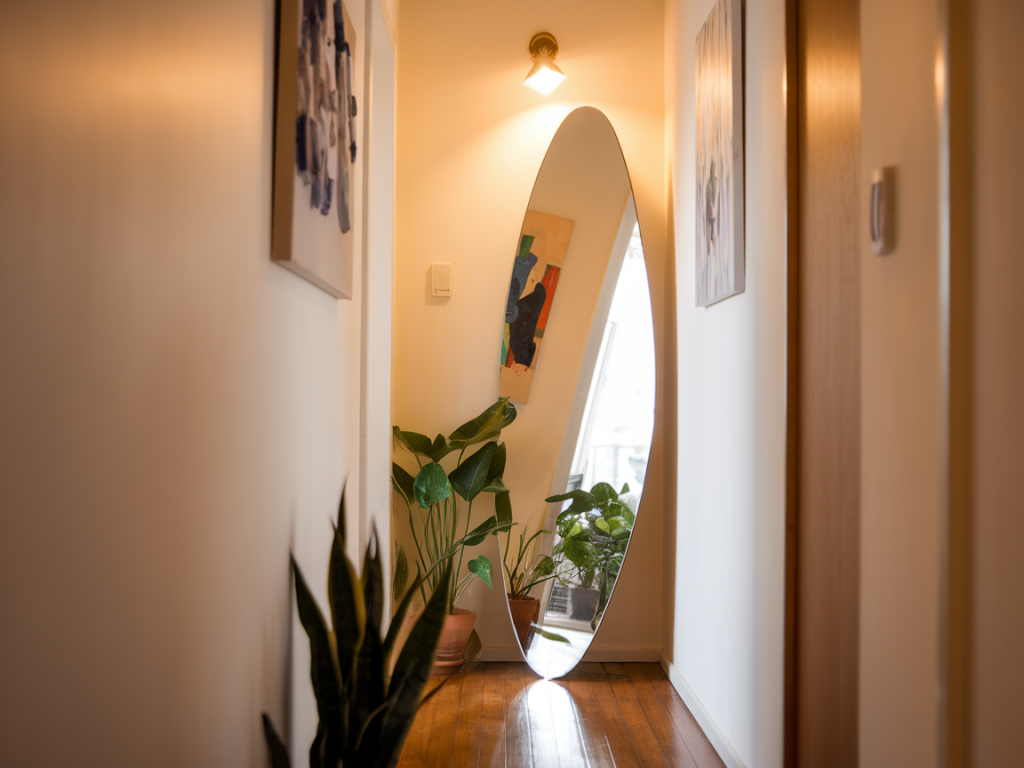
I still remember the first narrow hallway I styled with a single sculptural mirror from Thukthaeshop: a slim, organic-shaped piece with a hand-finished brass frame that felt like a little pause between rooms. The effect was immediate — the corridor felt less like a tunnel and more like a curated passage, wider, brighter and somehow more inviting. Mirrors are more than decorative afterthoughts; when chosen and placed with intention, a single sculptural mirror can transform the spatial perception of a hallway. Below I share how and why, with practical tips you can use whether you’re working with a short entryway or a long, dim corridor.
Why one sculptural mirror can change everything
Mirrors manipulate light and perception. In a narrow hallway, where floor space is limited and walls can feel oppressive, a thoughtfully chosen sculptural mirror does three things at once:
Choosing the right sculptural mirror for a narrow hallway
Not every mirror achieves the same effect. When selecting a piece from Thukthaeshop or elsewhere, consider these factors:
Placement tips that actually work
Placement is as important as the mirror itself. Here are practical rules I use when styling hallways:
How shape and texture affect perception
My favorite sculptural mirrors are not symmetrical. An asymmetric silhouette or a mirror with an irregular edge stops the eye from reading the hallway as a mere corridor and invites curiosity. Texture—whether through a hammered metal frame or a patinated finish—adds depth that flat paint or wallpaper cannot.
Here’s a quick comparison to help you decide which style suits different hallway types:
| Hallway type | Best mirror shape | Recommended frame |
|---|---|---|
| Short + low ceiling | Wide horizontal or oval | Thin metal frame, light finish |
| Long + narrow | Tall vertical or asymmetrical organic | Warm brass or textured wood |
| Dark + windowless | Large vertical or shaped mirror | Mirror with reflective backing and slim frame |
Lighting—the secret multiplier
Even the most beautiful mirror needs light to work its magic. If you don’t have a window opposite the mirror, add focused lighting:
Styling around the mirror
I often style the area around a hallway mirror with things that add life without cluttering: a slim vase with seasonal stems, a shallow tray for keys, or a small piece of wall art offset from the mirror’s edge. Keep the immediate area tidy so the mirror’s reflection reads as intentional space rather than visual noise.
Installation and maintenance tips
Mirrors can be heavier than they look. Use proper wall anchors or have a fitter install it if you’re uncertain. For maintenance, I recommend cleaning with a lint-free cloth and a mild glass cleaner; avoid abrasive cleaners that can damage frames—especially if they’re hand-finished.
Real-life example from Thukthaeshop
One of our best-selling pieces is an irregular brass-framed mirror made by an independent metalworker in Portugal. I installed it in a client’s narrow townhouse hallway last winter: we positioned it opposite a small entry window and added a narrow console beneath. The mirror nearly doubled the perceived width of the space and reflected a soft winter sky every afternoon. Guests commented more on the mirror as an object of interest than on the hallway’s size — the exact shift I aim for when curating.
If you’re considering a sculptural mirror for your hallway, think about scale, light and the story you want the piece to tell. A single well-chosen mirror can do more than brighten a corridor — it can turn a functional transition into a moment of design.