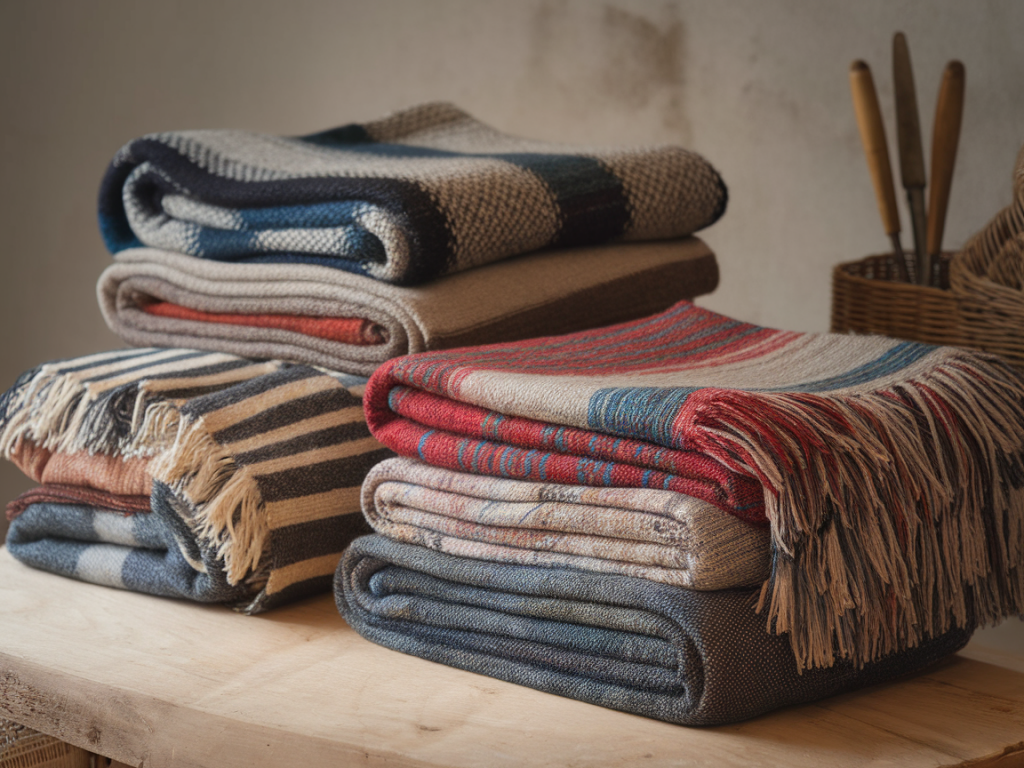
I often get asked how to keep the beautiful handwoven throws I source for Thukthaeshop looking fresh for years. These textiles are tactile, often made from natural fibres and small-batch techniques — which is exactly what makes them special, but also means they need a little more considerate care than a mass-produced blanket. Below I share my tried-and-true methods for packing, storing and reviving handwoven throws so they keep their colour, structure and soul.
Why handwoven throws need special care
Handwoven throws are living objects: irregularities in yarn, delicate fringe finishes, and natural fibres like wool, cotton, linen or alpaca all behave differently than synthetic blends. They can attract moths, crease when stored incorrectly, or develop a slight “flatness” if compressed for too long. That said, with a few simple practices you can protect their texture and extend their life substantially.
Short-term packing: when you’re moving or gifting
If I’m transporting a throw between homes or sending one as a gift, I follow these steps to keep it pristine:
- Clean first: Always make sure the throw is free of crumbs, body oils or dampness. A light shake outdoors followed by spot cleaning or a gentle wash is ideal.
- Roll instead of fold: Rolling reduces sharp creases and is kinder to handwoven fibres. Lay the throw flat, fold in any long fringes, then roll from one short end to the other.
- Protect the weave: Wrap the roll loosely in acid-free tissue paper or a clean cotton sheet. Avoid plastic directly against the textile for long stretches, as trapped moisture can lead to mildew.
- Box it up: Place the wrapped roll in a sturdy cardboard box or a breathable fabric bag. If it’s a gift, I like to add a lavender sachet for scent and natural moth deterrent.
Long-term storage: what to avoid and what to choose
For seasonal storage or long-term stashing, my priorities are ventilation, protection from pests, and avoiding compression.
- Breathable containers: Use cotton storage bags, muslin, or brimmed wardrobe boxes. Avoid vacuum-sealing delicate handweaves — while it saves space, prolonged compression can crush fibres and ruin loft.
- Use cedar or lavender: Cedar blocks or lavender sachets repel moths without the chemical smell of traditional mothballs. Refresh these natural deterrents annually.
- Climate matters: Keep throws in a cool, dry place away from direct sunlight. Attics and basements often have humidity swings, so choose an interior closet or under-bed drawer if possible.
- Don’t stack heavy: If you store multiple throws, don’t pile heavy items on top. Place lighter throws atop heavier ones, and avoid pressing down with other textiles or boxes.
Folding, rolling and folding the right way
I tend to alternate techniques depending on space and the fibre:
- Rolling: Great for chunky or loosely woven throws. Roll gently to avoid stretching the weave.
- Loose folding: For more structured weaves (like tightly woven cotton or linen throws), fold logically along the weave pattern and avoid creating a single tight crease that will stay.
- Layer with tissue: If you must fold several times, tuck thin acid-free tissue between folds to reduce abrasion and permanent creasing.
Cleaning basics: regular maintenance
My regular care routine keeps throws looking and smelling fresh without over-washing them — which can shorten their life.
- Air frequently: A few hours outside on a dry, shaded day will refresh fibres and release trapped dust. Direct sun can fade colours, so always choose shade.
- Shake and brush: I shake out throws and, for wool or alpaca, use a soft clothes brush to lift dust and revive nap.
- Spot clean: For spills, blot immediately with a clean cloth. Use cold water and a mild soap or a wool-specific cleaner for protein fibres. Test any cleaner on an inconspicuous area first.
- Wash sparingly: Many handwoven throws benefit from minimal washing. When needed, hand wash gently in cool water with a specialist detergent (Eucalan, The Laundress Wool & Cashmere Shampoo, or similar). For machine-washable pieces, use the delicate cycle inside a mesh laundry bag.
Reviving a flattened or creased throw
Throws that have been stored tightly or sat heavy can lose loft or develop creases. Here’s how I revive them:
- Steam carefully: A handheld steamer or the steam setting on your iron (kept a few inches away) will relax fibres and reduce creases. For wool, always steam rather than press. Hold the fabric taut while steaming.
- Reshape when damp: If you’ve washed the throw, lay it flat to dry on a clean surface and gently pat it back into shape. Reshape fringes and edges before the textile dries completely.
- Fluff the pile: For textured throws, once dry, flip them and give a gentle brush or shake to lift the weave and restore handfeel.
- Spot treatment for odours: Sprinkle a light dusting of baking soda, let sit for a couple hours, then shake or vacuum gently with a brush attachment.
When to call a pro
Some handwoven pieces — especially vintage, very delicate fibres, or complex natural dyes — are best handled by a specialist.
- Stubborn stains: Oil, wine or dye transfers often need professional attention to avoid damage.
- Structural repairs: If there’s a pull, significant fraying or a damaged selvedge, a textile conservator or experienced upholstery/needleworker can reweave or reinforce without altering the throw’s character.
Quick care summary
| Task | Best method | Notes |
|---|---|---|
| Short-term transport | Roll + tissue + box | Avoid tight plastic wrap |
| Long-term storage | Breathable bag + cedar/lavender | Cool, dry place; avoid compression |
| Freshening | Air + soft brush | Shade for airing |
| Washing | Hand wash with wool-safe detergent | Wash rarely; reshape flat to dry |
| Reviving | Steam + gentle brushing | Keep steam at a distance for delicate fibres |
Packaging ideas if you’re gifting a throw
Presentation matters — but keep it kind to the fabric. I like to:
- Wrap the rolled throw in unbleached cotton or kraft paper and tie with cotton twine.
- Include a small card with fibre content and care tips (this saves future guesswork).
- Add a sachet of dried lavender or a small cedar heart inside the box — practical and pretty.
Every handwoven throw tells a maker’s story, and with a little attention you can ensure that story continues to be told for years. If you’d like personalised advice for a specific throw from Thukthaeshop — fibre content, weave or dye type — send me the product link or a photo and I’ll help you with tailored care instructions.