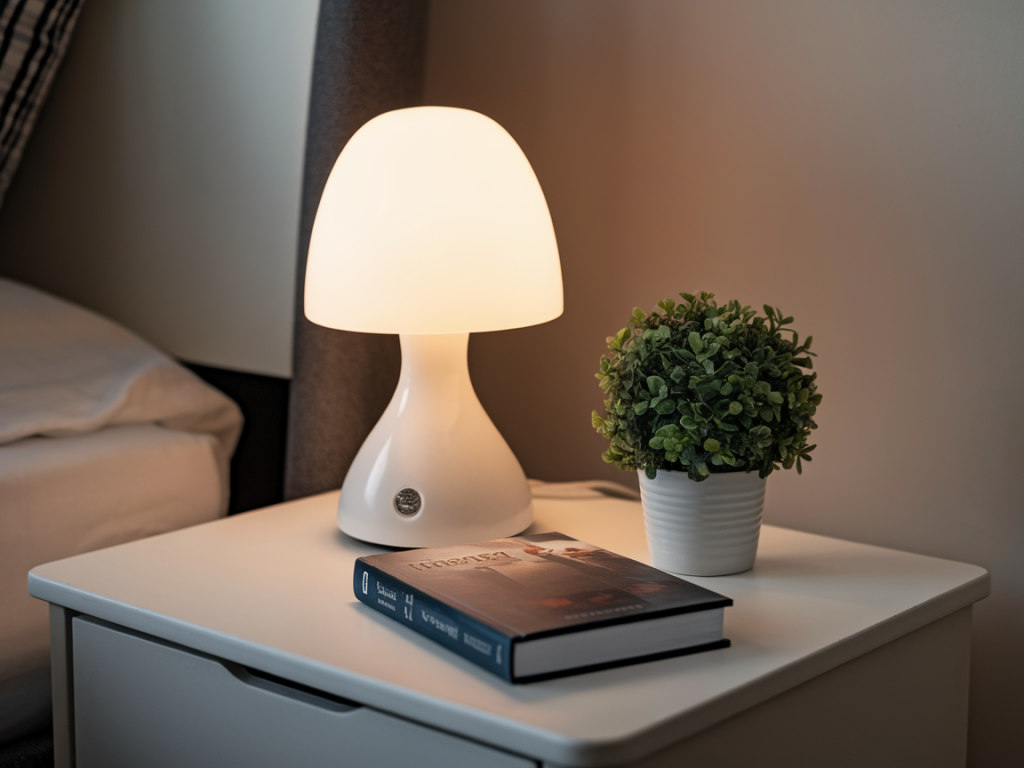
Choosing the right bedside lamp for a small nightstand is one of those home decisions that feels small until the light hits the room — and then you realise how much it changes everything. I often get messages from customers at Thukthaeshop asking how to pick a lamp that doesn’t overwhelm a narrow table yet still provides comfortable reading light. Over the years I’ve tested dozens of lamps, tried different bulbs and swapped shades late at night while styling vignettes. Here are the practical rules and styling tips I use when I help people light a small bedside area.
Start with scale: measure first
Before you click “add to cart,” take a moment to measure. I always measure the width and depth of the nightstand and the vertical space between the tabletop and the underside of any shelves or the headboard top.
- Recommended clearance: Leave at least 6–8 cm (2.5–3 in) from the lamp base edge to the edge of the nightstand. This avoids accidental knocks and gives the lamp room to breathe.
- Max lamp base diameter: For a very narrow nightstand (25–30 cm / 10–12 in wide), choose a base no wider than 12–14 cm (5–6 in).
- Proportion of height: The lamp height (base + shade) should typically be between 60–75% of the height of your headboard or at least high enough that the bottom of the shade sits around eye level when you’re seated in bed. For most beds that means a lamp 40–55 cm (16–22 in) tall is comfortable.
Think about reading height and light direction
For bedside reading, the most important thing is that the bulb and shade direct light where you need it, without glare into your eyes. I prefer lamps where the bottom edge of the shade sits roughly at eye level when you're seated — that way the bulb is shielded but the light falls across the page.
- Shade shape: A tapered drum or empire shade funnels light downward while diffusing it softly. This is ideal for reading without creating a harsh pool of light.
- Adjustable arms: If you like to read in different positions, a small articulated or swing-arm lamp can be a game changer. Look for compact models such as small brass swing-arm lamps or wall-mounted options to save surface space.
- Directional light: Consider a lamp with an adjustable shade or a built-in directional head; these give you control without needing more wattage.
Choose the right bulb and brightness
Bulb choice affects both comfort and atmosphere. Lately I recommend LED bulbs for bedside lamps: they run cool, last a long time and now come in pleasant warm tones.
- Brightness: For reading, aim for 400–800 lumens (about 40–75W incandescent equivalent). If you prefer softer light, 300–400 lumens can work with a low-reflectance shade.
- Colour temperature: Pick a warm white — 2700K–3000K feels cozy and conducive to winding down. 4000K is too cool for most bedrooms unless you need task-focused, bright light.
- Dimmable LED: If the lamp supports dimming, choose a dimmable LED bulb and pair it with the correct dimmer switch. I install a dimmer on at least one bedside lamp in every room I style.
Shade size: simple math that works
A common mistake is using a shade that’s too large for a small base or too tall for bedside use. Here’s a quick guide I use when choosing shades:
| Nightstand width | Max shade diameter | Recommended shade height |
| 25–30 cm (10–12 in) | 20–25 cm (8–10 in) | 12–18 cm (5–7 in) |
| 30–40 cm (12–16 in) | 25–30 cm (10–12 in) | 15–22 cm (6–9 in) |
| 40+ cm (16+ in) | 30–40 cm (12–16 in) | 18–28 cm (7–11 in) |
In practice, I often pick shades slightly narrower than the nightstand by 5–8 cm so the lamp looks intentional rather than cramped.
Pick a base that reads light
On a small nightstand, the visual weight of the lamp matters as much as its physical size. I favour bases that are visually light: slim stems, open shapes or transparent materials. Glass or thin ceramic bases keep the lamp from appearing bulky.
- Tall & slim bases: These work well on narrow tables because they provide height without taking up horizontal space.
- Round or square compact bases: Choose a compact footprint when space is tight. A small marble or brass base can look luxe without needing a large surface area.
- Weighted bases: Even if compact, make sure the base is weighted enough to be stable. I avoid overly tall, light-feeling lamps that tip easily when nudged.
Consider wall-mounted and clamp options
If your nightstand is truly tiny — or you prefer a minimalist look — wall-mounted sconces or clamp lamps are my go-to solutions. I’ve installed several of these in small apartments and they instantly free up surface space.
- Hardwired sconce: Clean look, professional install; choose a sconce with a swivel arm or an adjustable shade for reading.
- Plug-in wall lamp: Easier to install and flexible; hides the cord with a conduit or simple cable channel.
- Clamp lamps: Great for renting: you can clip them to a shelf or the headboard without drilling.
Switch types and placement
Small details like the switch location impact usability. I often recommend lamps with easy-to-reach switches — pull-chain, rotary at the socket or an inline cord switch — especially if you’re using the lamp one-handed while settling into bed.
- Touch lamps: Convenient but can be trickier if you want a precise dim level; I find them fine for small bedside lamps used mostly to turn on/off.
- Pull-chain or rotary: Highly tactile and reliable; ideal when your hands might be holding a book or cup.
- Smart bulbs: If you like automation, use a smart bulb so you can control brightness and colour temperature from a phone or voice assistant — handy for late-night adjustments.
Styling tips to keep the nightstand airy
Once the functional choices are made, styling keeps the bedside feeling light. I like to leave one visual “breathing space” on the tabletop: one lamp, one tray or dish for small items, and maybe a slim book or bud vase. Keep cord management neat — a wrapped cable or a short extension tucked behind the table makes the scene feel intentional.
- Layering: Place a slim coaster or small tray beneath the lamp to ground it visually if the base is small.
- Balance: If you have a very small nightstand, balance the lamp on one side and a low object (clock or dish) on the other to avoid the lamp looking like it’s taking over.
- Materials: Mix textures: a matte ceramic lamp, linen shade and a brass tray create contrast without clutter.
At Thukthaeshop I curate a range of options that suit small nightstands — from petite ceramic table lamps to adjustable swing-arm sconces and elegant glass bases with warm linen shades. If you want, send me a photo of your nightstand and I’ll suggest a few pieces that will fit and function beautifully. I love the process of matching light to space because good light transforms how a room feels.