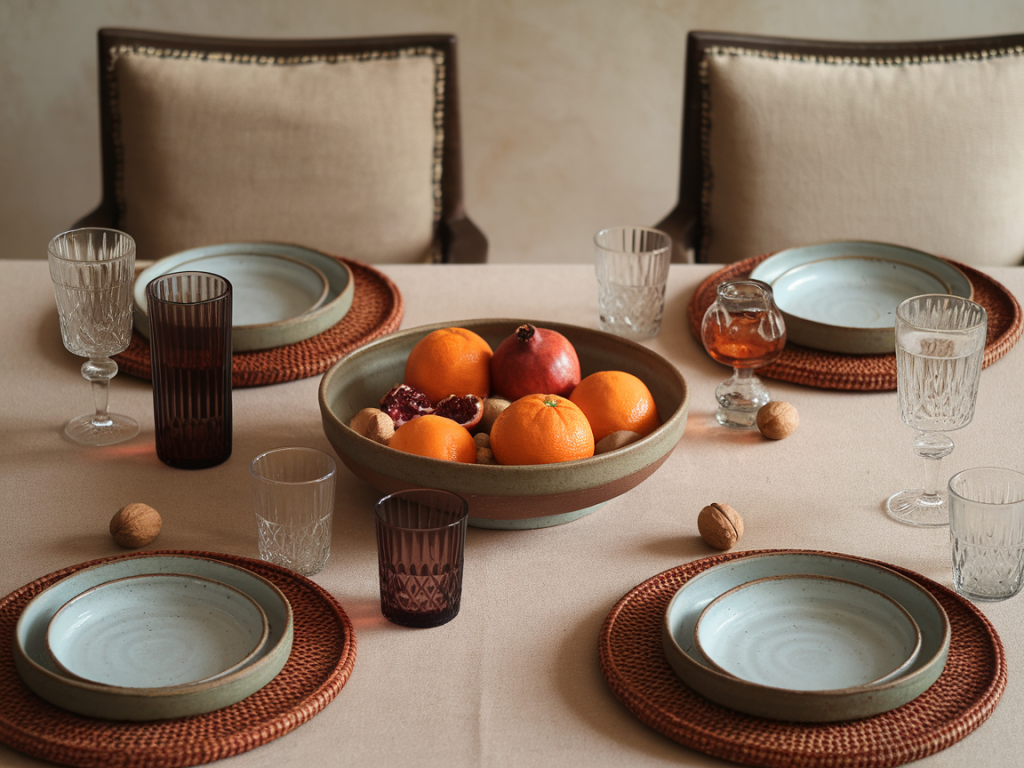
I love setting a table that feels effortless yet considered — the kind that invites conversation and makes a meal feel like an event without being fussy. Today I want to share how I style a seasonal tablescape for four using three ceramics from Thukthaeshop that combine the charm of handmade pieces with the clarity of glass. These three items are my starting point: a set of handcrafted stoneware dinner plates, a pair of blown glass tumblers, and a small glazed serving bowl — each chosen for their texture, tone and ability to play well together. I’ll walk you through my thinking, placement, and little finishing touches so you can recreate a look that feels modern, layered and thoroughly livable.
Why mix handmade ceramics with glass?
Mixing materials is one of my favourite tricks because it adds visual interest and balance. Handmade ceramics bring warmth, irregularity and tactility — those subtle ridges and imperfect rims that make each piece unique. Glass introduces lightness, reflection and contrast: the way it catches candlelight or the sheen of a vinaigrette. Together, they read as intentional and relaxed rather than matched-to-the-mill.
The three pieces I’m using from Thukthaeshop
- Hand-thrown stoneware dinner plates — neutral glaze with slight speckling and a soft matt finish. They’re sturdy and have a generous rim, perfect for layering.
- Small glazed serving bowls — glossy interior and matte exterior in a warm, seasonal hue (think deep mustard for autumn or soft sage for spring). Ideal for shared starters or dressing a salad at the table.
- Hand-blown glass tumblers — subtle blue or amber tint, slight variation in thickness, and a rounded lip that feels friendly in the hand.
All three are representative of the kind of small-batch, quality pieces I curate at Thukthaeshop. They’re versatile enough to be used across seasons and styles.
Start with a seasonal palette
Choose a palette that reflects the season but remains flexible. For autumn, I lean into warm neutrals (ocher, terracotta, cream) with deep greens and brass accents. For spring, I go for soft pastels (sage, blush) with cool glass tones and raw wood. The stoneware plates should act as your anchor — pick linens and napkins that either match the warmth of the glaze or provide a subtle contrast.
Table foundation: linens, placemats and placement
I like to layer rather than match. Start with a simple linen tablecloth or runner in a neutral tone. Then add woven placemats — jute or seagrass for texture — which ground each setting and protect the table. Place the stoneware dinner plate in the centre of each setting, offset slightly toward the table edge to create an open, relaxed look.
- Placement tip: leave about 60–70 cm between the centres of plates so guests have elbow room.
- Napkin styling: fold linen napkins casually and tuck them under the plate rim or place them to the left with a simple ceramic or brass napkin ring.
Layering with the small glazed bowls
The small glazed serving bowls are perfect as both individual and shared pieces. For a four-person table, I either place one bowl on each plate to serve a starter or place two bowls in the middle as shared dips or condiments.
When used per setting, nest the bowl slightly off-centre on the dinner plate so the plate rim shows. This creates a pleasing frame and showcases the plate’s handmade texture. If you’re sharing, put the bowls on small wooden boards or a linen doily in the centre to create a mini vignette.
Balancing with glass tumblers
Glass tumblers should be placed above the knife (or slightly to the right of the top of the plate). The colour of the glass sets a wonderful tone: a faint amber brings warmth; a blue-green suggests freshness. Because they’re slightly translucent, they act as subtle accents rather than competing with the ceramics.
Tip: use the tumblers for both water and a pre-dinner spritz. If you want to include wine glasses, pick a low-profile stem that won’t overwhelm the hand-blown tumblers.
Centerpiece and height play
For a table of four, keep the centrepiece low and layered. I build height with a single slender candle or two tapered candles in brass or ceramic holders, and add one or two small natural elements: a cluster of seasonal fruit (quinces in fall, small lemons in spring) or a length of eucalyptus. The small glazed bowls can also double as mini bud vases — a single bloom or sprig in each bowl looks beautifully considered.
Practical serving and flow
Design your service so guests aren’t constantly passing heavy platters. Use the small glazed bowls for sauces, nuts or olives at hand-level. The stoneware plates are durable enough for family-style mains; if you’re serving something saucy, set a small bread plate or extra bowl beside each setting for crumbs and finishes.
Lighting and atmosphere
Lighting transforms a table. If you have an overhead pendant, dim it and rely on candles and the natural glow in the glass tumblers to create intimacy. If you’re outside or in a bright breakfast nook, use one candle and allow daylight to pick up the texture of the ceramics. I often layer by using a mix of candle heights — a single tall taper with a few tea lights in small ceramic holders complements the handmade aesthetic.
Finishing details that feel thoughtful
- Place cards: write names on small tags and tuck them under the rim of the bowl for a personal touch.
- Sauces and drizzles: serve olive oil or dressing in a tiny pourer so guests can finish their plates — it’s both practical and pretty.
- Texture contrast: add a linen-wrapped bread bundle or a small wooden butter board to bring a raw, tactile counterpoint to the glazed pieces.
Quick checklist before guests arrive
| Table linen placed | Placemats/chargers set |
| Stoneware plates and bowls arranged | Glass tumblers and extra glassware in place |
| Centerpiece/candles laid out | Serving bowls in reach |
| Napkins styled and utensils ready | Lighting adjusted |
Styling a seasonal tablescape for four is about balance: the tactile warmth of handmade ceramics, the reflective clarity of glass, and a few natural accents that echo the season. Using three well-chosen pieces from Thukthaeshop as your starting point makes the process simple and cohesive — the rest is about layering, light and small gestures that make guests feel welcomed. If you’d like product links or ideas matched to a specific season, I’m always happy to recommend combinations from the boutique.