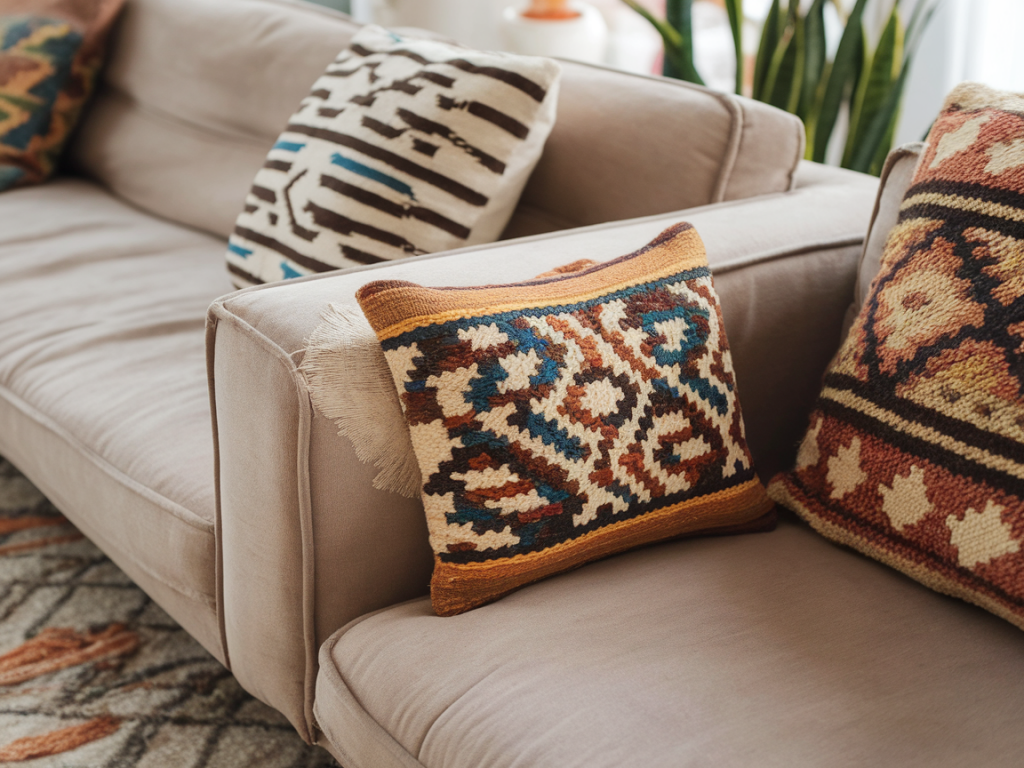
There’s nothing quite like a well-loved sofa. The flattened arm where your cat naps every afternoon or the rubbed leather from years of canine cuddles tells a story — but sometimes you want that story to look intentional. Over the years running Thukthaeshop, I’ve worked with countless makers of handwoven cushions, and I’ve developed a simple, three-step method to hide a pet-worn sofa arm that looks stylish and lived-in rather than neglected. Below I share my exact approach using specific handwoven Thukthaeshop cushions, plus practical tips and answers to questions I’m frequently asked.
Why handwoven cushions are the best fix
Before we dive into the steps, a quick note on why I prefer handwoven cushions for this job. Handwoven textiles bring texture, warmth and a crafted quality that masks wear better than mass-produced covers. The irregularities in weave and natural fibres distract the eye, and thicker weaves hold shape over time — perfect for camouflaging dents, discoloration and loose filling on sofa arms.
From our Thukthaeshop collection I often reach for:
- Thukthaes chunky kilim cushion (50 x 50 cm) — robust, geometric patterning that draws attention away from small stains.
- Handspun wool bolster (20 x 60 cm) — ideal for hugging the arm and creating a tailored mock-up of a freshly padded armrest.
- Soft linen-woven envelope cushion (45 x 45 cm) — neutral, breathable and great as an outer layer to soften an otherwise busy arrangement.
Three steps to hide a pet-worn sofa arm
These steps are intentionally simple so you can do them with cushions you already own or with a small, tasteful purchase from Thukthaeshop. Think of it as staging: subtle, layered and purposeful.
- Step 1 — Reinforce the arm’s silhouette
Assess the damage first. If the arm is sunken, add a firm base layer that restores a pleasing profile. I love using a handspun wool bolster (20 x 60 cm) tucked snugly along the top of the arm. Place it so the bolster’s length runs front-to-back, creating a crisp edge and lifting any sagging fabric. If you don’t have a bolster, a tightly rolled blanket or a lumbar pillow works as well. The point is to rebuild the shape — once the arm looks structured, the rest is easy.
- Step 2 — Mask texture and stains with a patterned cushion
Next, layer a patterned handwoven cushion slightly over the reinforced area. I typically pick our Thukthaes chunky kilim cushion (50 x 50 cm) for its bold motifs. Place it at a deliberate angle so the pattern leads the eye away from the most worn spot. The tactile weave distracts from pilling or discoloration and gives you the freedom to stage the sofa without erasing its lived-in charm.
- Step 3 — Soften and finish with a neutral outer layer
Finally, top with a softer, neutral cushion — I favour the linen-woven envelope cushion (45 x 45 cm). This creates a layered look: bolster for shape, patterned cushion for visual interest, and linen for softness. Slightly overlap the cushions and let one corner drape over the arm to suggest effortlessness. This layered styling reads as intentional decor rather than a cover-up.
Quick styling variations depending on your sofa
- Delicate fabrics (silk, velvet) — avoid friction by placing a thin cotton square between the arm and the bolster. Use softer linen cushions on top to prevent marking.
- Leather sofas — reinforced bolsters should be placed under a non-slip mat or a leather-friendly suede strip to keep them from sliding.
- Deep, wide arms — use two smaller cushions (30 x 50 cm) instead of one large square to create a neat, layered effect.
Practical care tips to keep the look working long-term
- Rotate cushions weekly so wear is even — pets will often choose the newest, softest spot.
- Use washable inner pads where possible. Many of our Thukthaeshop cushion covers are removable and easy to launder.
- Brush or vacuum woven cushions gently to remove pet hair. A lint roller works wonders on textured weaves.
- For leather or suede arms, treat exposed areas with a suitable protector to avoid long-term discoloration even if they’re partially covered.
Common questions I hear — answered
Will this method look like I’m hiding damage? Not if you treat it as styling rather than concealing. Layering with intention (varying textures, mixing pattern and neutral tones) reads as a designed vignette. The goal is to make the arm feel integrated into the sofa’s overall composition.
What cushion sizes work best? Here’s a quick reference table I use when choosing pieces for different arm types:
| Arm type | Bolster/underlayer | Patterned cushion | Outer soft layer |
|---|---|---|---|
| Narrow (≤12 cm) | Small bolster 15 x 45 cm | Square 40 x 40 cm | Small linen 35 x 35 cm |
| Standard (13–20 cm) | Bolster 20 x 60 cm | Square 50 x 50 cm | Square 45 x 45 cm |
| Wide (>20 cm) | Two thin cushions or long bolster 25 x 70 cm | Two 40 x 60 cm cushions | Soft 50 x 50 cm linen |
Do pets mind the change? Most adapt quickly. Cats often appreciate the new textures as extra napping real estate; dogs generally follow the smell of their owner and will settle where you sit. If your pet is resistant, place a familiar blanket underneath the bolster for a few days to bridge the transition.
Which Thukthaeshop cushions are easiest to care for? Our removable linen-woven covers are machine-washable on a gentle cycle, and kilim covers can usually be spot-cleaned or professionally cleaned. Always check the product care notes on the item page; I make sure each listing includes clear care guidance because practical longevity matters as much as looks.
Styling final notes
Think of this three-step approach as crafting a small stage on your sofa arm. It’s less about hiding and more about reframing — converting a sign of everyday life into a composed part of your decor. With just a bolster, a handwoven patterned cushion and a soft linen layer (all items you can find or customise via Thukthaeshop), you can turn a pet-worn arm into a deliberate and beautiful detail.