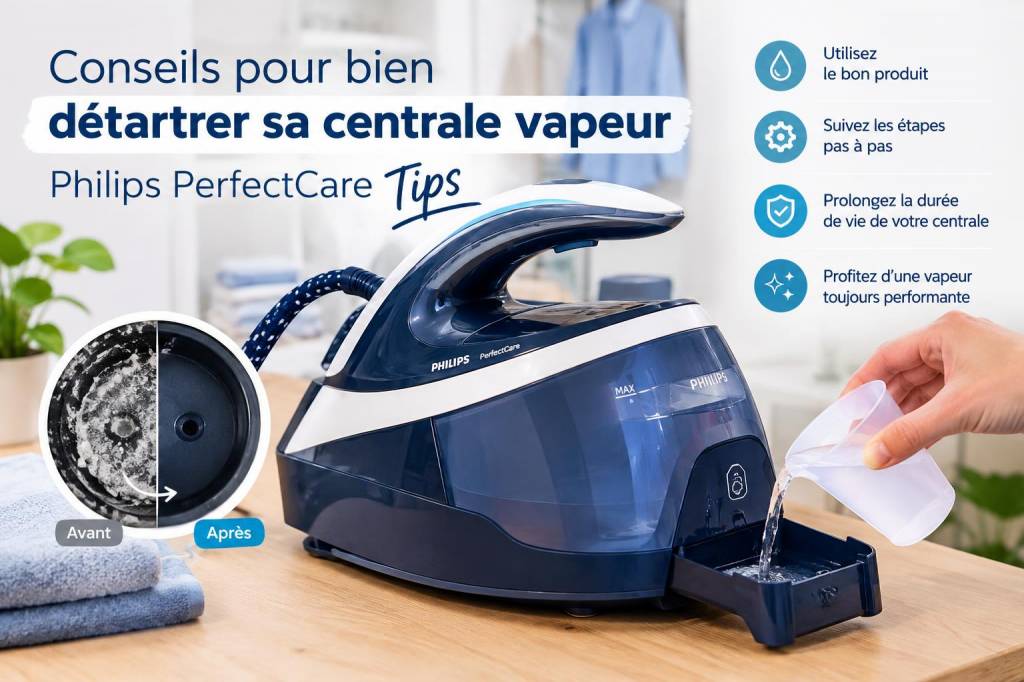
I care about beautiful, well-kept textiles as much as anyone who loves a warm home. Over the years, ironing and steaming have become part of my routine for keeping linens, tablecloths and curated textiles looking their best. But one thing I’ve learned the hard way is that a neglected steam generator — especially a Philips PerfectCare — can quickly go from helpful to harmful if you don’t descale it correctly. Below I share my conseils pour bien détartrer sa centrale vapeur, practical tips I actually use, common mistakes to avoid, and a few product-agnostic recommendations so your iron keeps performing without damaging fabrics or shortening its life.
Why descaling a steam generator matters
Hard water deposits (limescale) are the main enemy of steam appliances. Over time, mineral buildup can clog vents, reduce steam output, trigger warning lights, and in worst cases, cause internal corrosion. From my experience, a well-maintained Philips PerfectCare lasts significantly longer and gives more consistent steam — which means fewer frustrating re-irons and less risk of marks on delicate linens.
Quick facts:
My step-by-step routine: how I descale a Philips PerfectCare
I follow a simple, repeatable process every 3–6 months depending on water hardness and frequency of use. The steps are deliberately conservative to protect the internal components and my textiles.
Products and methods — what I use and avoid
There are three common approaches: manufacturer descaler, citric-acid-based descalers, and distilled water as preventive care. Here’s what I recommend and what I avoid:
Common mistakes to avoid (and why they matter)
When talking about “conseils pour bien détartrer sa centrale vapeur”, the most valuable guidance often means knowing what not to do. Here are errors I’ve seen and sometimes made myself:
How often should you descale?
There’s no one-size-fits-all answer. Factors that influence frequency:
As a rule of thumb:
Signs your Philips PerfectCare needs descaling now
Don’t wait for a warning light. These symptoms are reliable:
Quick troubleshooting if you see residue on clothes
If you notice white marks or spots on linens after steaming:
Comparison table: descaling options at a glance
| Method | Effectiveness | Risk to appliance | Cost | Recommended? |
|---|---|---|---|---|
| Manufacturer descaler (Philips) | High | Low | Medium | Yes |
| Citric-acid descaler | High | Low–Medium (if used correctly) | Low | Yes (if Philips allows) |
| Vinegar | Medium | Medium–High (possible corrosion) | Very Low | No (generally avoid) |
| Distilled water (preventive) | Prevents scale | None | High (ongoing) | Strongly recommended |
Environmental and cost considerations
Using distilled water increases the running cost but reduces maintenance and waste over time. Descaling solutions often come in concentrated bottles — a single bottle can treat several cycles. From an environmental perspective, preventing scale (with distilled or filtered water) reduces chemical use and extends the appliance lifespan, which is a net positive for sustainability.
Data & sources I trust
I base these recommendations on manufacturer guidance and independent testing. Helpful sources include:
FAQ — quick answers I keep handy
How do I know if Philips allows a specific descaler? Check your model’s manual or Philips support page. They list permitted products and any specific procedures for that model.
Can I use tap water if I’m careful? You can, but I recommend filtered or distilled water in areas with hard water. It prevents buildup and saves time in the long run.
Is there a simple home test for water hardness? Yes — many hardware stores sell test strips. If you live in a hard-water area, plan on more frequent descaling.
Personal tips I swear by
When to call a pro
If after a full descaling cycle the appliance still sputters, displays error codes, or leaks, it’s time to contact support. Philips has model-specific troubleshooting and authorized repair centers. Continuing to use a faulty unit risks damage to your textiles and can void warranties.