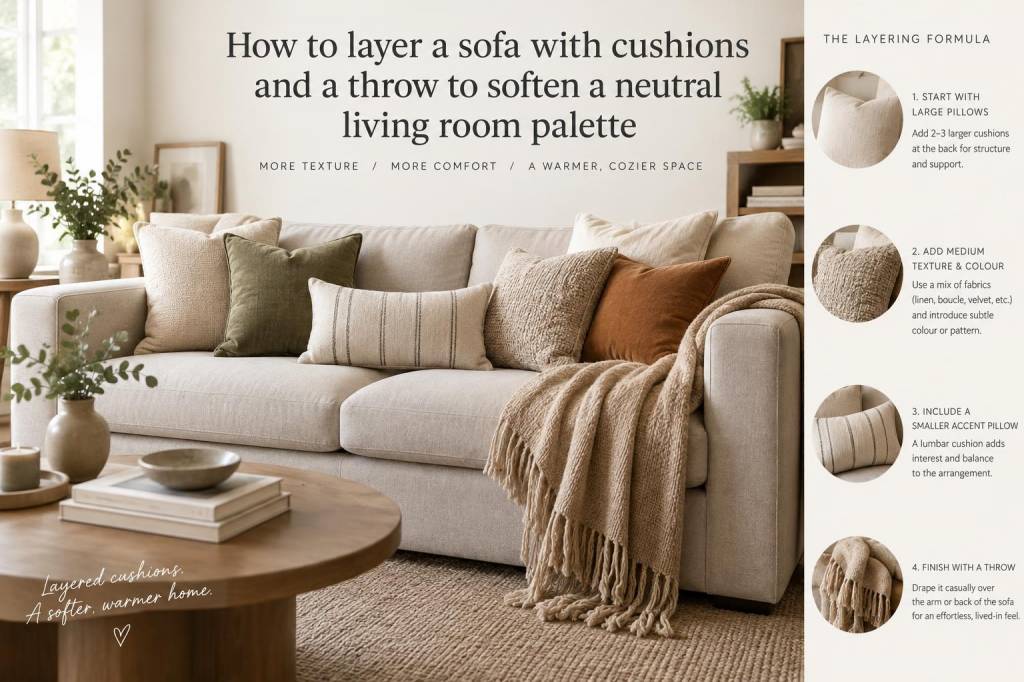
When I style a neutral living room, I never see beige, cream, taupe, or soft gray as a limitation. I see a quiet canvas. A sofa in a restrained palette can feel elegant, calm, and timeless, but it can also look a little flat if it is left bare. This is where cushions and a throw become essential. They add softness, shape, depth, and a sense of lived-in warmth without disturbing the calm mood of the room.
I love using textiles to make a sofa feel complete, because they let me shift a space from polished to welcoming in a matter of minutes. A well-layered sofa can change the whole atmosphere of a living room. It can make a neutral room feel richer, more personal, and more inviting, while still keeping that understated look many people want at home.
Why layering matters in a neutral room
A neutral sofa often acts like an anchor in a living room. It gives you freedom, but it can also disappear into its surroundings if every other element is equally soft and pale. Layering cushions and a throw creates contrast through texture, shape, and subtle color variation. Instead of relying on strong color, I lean on tactile differences: bouclé against linen, wool against cotton, velvet against washed canvas.
This approach is especially useful if your living room has a calm color scheme and you do not want to interrupt it with bold statements. A layered sofa can still feel interesting. In fact, some of the most beautiful interiors I have seen are not filled with loud colors, but with carefully chosen textiles that catch the light in different ways and make the room feel quietly alive.
Starting with a base that feels intentional
Before I add any cushions, I begin by looking at the sofa itself. Its shape, depth, fabric, and color all influence what will work on it. A structured sofa with clean lines usually benefits from a mix of softer, more relaxed cushions. A deeper or more casual sofa can carry larger cushions and a more generous throw.
I also think about the room as a whole. If there is a pale rug, light walls, and simple furniture, I may choose textiles with more texture so the sofa does not fade into the background. If the room already has strong wood tones or darker accents, I tend to keep the layering softer and lighter. Balance matters more than symmetry.
My favorite neutral combinations often come from layering shades that sit close to one another rather than matching everything exactly. For example, ivory, oatmeal, stone, clay, and warm gray can feel much more sophisticated together than a single flat beige tone repeated everywhere.
Choosing cushions with depth instead of clutter
When I choose cushions, I think in terms of shape, scale, and texture first, color second. A sofa rarely needs many cushions to feel styled. It needs a thoughtful mix.
I usually start with a pair of larger cushions at each end of the sofa. These create structure and frame the seating area. Then I add one or two smaller cushions for contrast. That mix keeps the arrangement from feeling too rigid. If every cushion is the same size, the result can look stiff. If every cushion is too small, the sofa can feel busy and underwhelming.
Texture is what really brings a neutral palette to life. A few materials I love using are:
- Linen for a relaxed, airy look
- Bouclé for softness and gentle volume
- Wool for warmth and seasonal depth
- Velvet for a subtle glow and richer finish
- Cotton canvas for casual balance and everyday comfort
If you prefer a very calm room, choose cushions in similar tones but different finishes. A linen cushion beside a knitted wool cushion can feel layered without drawing too much attention. If you want a little more visual movement, introduce one cushion with a faint pattern such as woven stripes, a small check, or an understated embroidered detail.
Adding a throw without making it look forced
A throw should feel like it belongs, not like it was placed there at the last second. I like to think of it as the finishing movement in the composition. It can sit folded, draped, or loosely tucked, depending on the mood I want.
For a more polished living room, I often fold the throw lengthwise and place it over one arm of the sofa or across part of the backrest. This gives structure and keeps the look crisp. For a softer, more relaxed result, I let it fall naturally, with one edge longer than the other. That asymmetry helps the room feel easy and comfortable.
The material of the throw matters just as much as the way it is styled. A chunky knit can bring a sense of winter comfort. A lightweight cotton throw works well year-round and looks especially good in brighter rooms. A brushed wool throw can add a more refined texture, while a linen blend feels effortless and understated.
I often choose a throw in a shade slightly darker or lighter than the sofa itself. That small shift in tone makes the layering visible without creating harsh contrast. It is a simple trick, but it works beautifully in neutral spaces.
A simple formula I rely on
When I want a sofa to feel soft and balanced, I often use a formula that is easy to adapt. It is not a rigid rule, but it helps me create harmony quickly.
| Element | What I look for | Effect |
|---|---|---|
| Large cushions | Plain fabric, calm tone, generous size | Structure and comfort |
| Smaller cushion | Different texture or subtle pattern | Visual interest |
| Throw | Contrasting weave or softer shade | Warmth and movement |
| Overall mix | Close tonal range with layered materials | Calm, rich, collected look |
This formula works because it keeps everything connected. Nothing feels random, yet the sofa still has personality. That is exactly what I want in a neutral living room: softness without fuss, elegance without stiffness.
Using color in a restrained way
Neutral does not have to mean colorless. I like introducing quiet color through textiles because it can warm a room without changing its character. Muted terracotta, soft olive, dusty blue, warm camel, and faded rose all work beautifully with a neutral base. These shades feel organic and human, not overly decorative.
When I use color, I keep it controlled. One cushion in a muted earthy tone can be enough to shift the whole mood of the sofa. A throw in a deeper shade can ground the arrangement and prevent it from feeling too pale. If the room already has a lot of light, I may choose one textile with a richer tone and keep everything else soft.
I also enjoy repeating a single accent color in a very restrained way. For example, a cushion with a faint terracotta stripe can echo a ceramic vase or a piece of wall art elsewhere in the room. That repetition creates flow, which is far more interesting than random decoration.
Making the sofa feel personal, not staged
The most successful sofa arrangements never feel overly styled. They feel like someone actually lives there. I always leave enough room for comfort. A sofa should invite someone to sit down, shift the cushions, and settle in. If an arrangement looks too perfect, it loses warmth.
That is why I avoid lining up every cushion with strict precision. A slight change in angle, a looser drape of the throw, or a cushion with a softer fill can make the whole sofa feel more natural. I like one cushion to appear slightly more relaxed than the others. That little bit of ease makes a room feel more welcoming.
Personal touches matter too. A textile with a handwoven finish, an artisanal pillow cover, or a throw with visible texture can make the room feel collected rather than generic. In a neutral living room, those details are often what give the space its soul.
Adjusting for season and light
I change sofa styling with the seasons because light affects neutral colors so much. In brighter months, I prefer lighter linens, cottons, and airy weaves. They keep the room fresh and open. In cooler months, I bring in denser textures, deeper neutrals, and softer, warmer materials that make the sofa feel more inviting.
Natural light also changes everything. A room with strong daylight can handle slightly heavier textures and richer shades. A dimmer room benefits from cushions and throws that reflect a bit of light, such as washed linen, brushed cotton, or velvet with a soft sheen. I always look at the room at different moments in the day before I decide what belongs there.
That seasonal flexibility is one reason I value textiles so much. They let me refresh a living room without replacing furniture or repainting walls. A few careful changes can make a familiar sofa feel newly considered.
What I pay attention to when editing a final arrangement
Once I have placed everything, I step back and check a few things. I ask myself whether the sofa feels balanced, whether one side feels heavier than the other, and whether the textures speak to one another. I also look for comfort. If the cushions are so arranged that nobody wants to sit down, I know I have gone too far.
- Keep a calm tonal range
- Mix at least two different textures
- Use one larger cushion pair for structure
- Add one smaller cushion for contrast
- Choose a throw that softens, rather than competes with, the sofa
- Leave a little breathing room so the seating still feels usable
I like that this kind of styling can be both practical and expressive. Cushions and throws are not only decorative. They shape the mood of the whole room. They can make a neutral living room feel layered, cared for, and quietly luxurious without demanding attention.
On a sofa, I am always looking for that balance between order and softness, between restraint and comfort. When those elements come together, a neutral palette stops feeling plain and starts feeling deeply inviting.