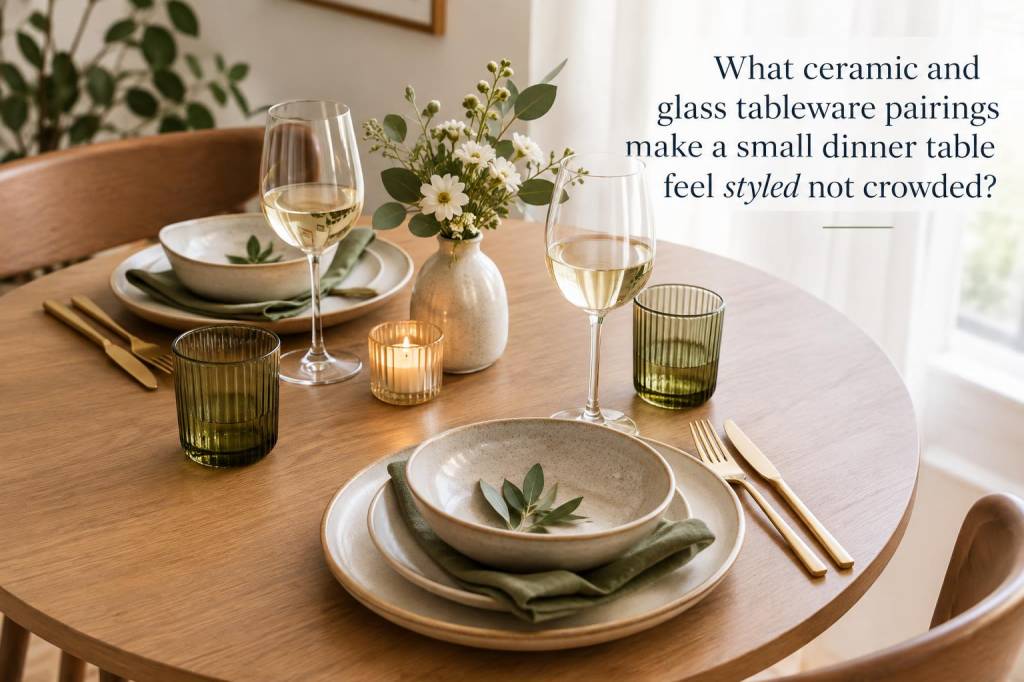
When I style a small dinner table, I think less about matching everything and more about creating breathing room. A compact table can feel elegant, warm, and intentional if ceramic and glass pieces are chosen with a light hand. I often start with one anchor material, then let the other play a quieter supporting role. That balance is what keeps a table looking styled instead of crowded.
Why ceramic and glass work so well together
Ceramic brings weight, texture, and a sense of craft. Glass brings airiness, reflection, and visual space. On a small table, that contrast is especially useful because each material does a different job. Ceramic grounds the setting. Glass opens it up. When I pair them carefully, the table feels layered without becoming busy.
I also love that both materials can be formal or casual depending on shape and finish. A matte stoneware plate with a clear tumbler feels relaxed and current. A glossy white porcelain bowl with smoked glass stemware feels refined but not fussy. The key is not to use too many competing textures at once.
My starting point for a small table
Before I choose any plate or glass, I look at the actual table shape and surface. A round bistro table, a narrow rectangular table, and a square breakfast table all call for different proportions. On smaller surfaces, I prefer pieces with slim silhouettes, low visual bulk, and simple lines.
My usual starting rule is this: one ceramic piece should do most of the visual work, while the glassware stays clean and understated. If the ceramics are bold, the glass should be quiet. If the glass is decorative, I keep the ceramics restrained. That single decision prevents the setting from feeling overloaded.
Pairings that feel balanced and open
One of my favorite combinations is matte stoneware in a soft neutral shade with clear glass tumblers. The stoneware adds warmth, while the clear glass almost disappears until it catches the light. This pairing works beautifully for everyday meals because it looks thoughtful without asking for attention.
Another pairing I return to often is white porcelain with lightly tinted glass. Soft green, amber, or smoke glass can bring a little depth to a table while still staying delicate. I especially like this when the rest of the setting is simple, because the slight color in the glass gives the table personality without adding clutter.
If I want something more textural, I choose handmade ceramic bowls with very smooth glassware. A hand-thrown bowl already carries movement and irregularity, so I keep the glasses elegant and plain. That contrast feels curated rather than accidental. It is a small trick, but it makes a big difference on a narrow table.
For a more modern look, I like graphic ceramic shapes with thin, vertical glass forms. Think shallow ceramic plates, stackable side plates, and stemware with fine lines. This combination feels refined and visually light, especially when the table itself is dark wood or a simple linen runner.
What I avoid when a table is small
I avoid mixing too many strong patterns on both materials at once. A patterned ceramic plate, a textured glass, a printed napkin, and a decorative charger can quickly become too much. On a small table, every item is close to the eye, so restraint matters more than abundance.
I also avoid oversized bowls, heavy footed glasses, and wide-rimmed plates unless the meal truly needs them. Large pieces can make a table feel tighter than it is. In my experience, smaller dinnerware with a thoughtful shape often looks more luxurious than bigger pieces that dominate the surface.
Another thing I watch carefully is height. Tall glassware and tall ceramic serving pieces can interrupt sight lines and make conversation feel crowded. I prefer low serving bowls, compact carafes, and glasses that stay visually neat. If I do use one taller piece, I keep everything else lower and simpler.
Color combinations I rely on
Neutral-on-neutral is my easiest formula for a compact table. Cream ceramic with clear glass, pale gray ceramic with smoke glass, or warm beige ceramic with crystal-clear tumblers all create a calm atmosphere. These combinations let food and lighting provide most of the interest.
I also enjoy one soft accent color paired with an otherwise quiet setting. A terracotta ceramic plate with clear glassware feels earthy and inviting. A deep blue ceramic bowl with transparent glass can feel elegant and slightly dramatic, especially in candlelight. The color should appear intentional, not repeated everywhere.
When I use colored ceramic, I usually keep the glass nearly invisible. When I use colored glass, I often choose white or pale ceramic. That contrast keeps each material readable, which is important in a small space where visual noise builds quickly.
Texture matters more than quantity
On a big table, you can sometimes rely on scale alone to create interest. On a small table, texture does more of the work. A softly speckled ceramic finish, a lightly rippled glass, a glazed bowl, or a hand-polished surface can make the table feel layered without adding more objects.
I am especially drawn to ceramic pieces with a tactile surface and glass pieces that catch light gently rather than aggressively. Highly reflective glass can feel flashy if the table is already full. A softer finish often feels more comfortable and more intimate for dining.
I think of texture as the quiet detail that makes a setting feel finished. A small table does not need many ingredients, but each one should earn its place.
Simple combinations I would choose for different moods
| Mood | Ceramic choice | Glass choice | Overall effect |
|---|---|---|---|
| Relaxed weekday dinner | Matte stoneware in cream or sand | Clear tumblers | Easy, calm, uncluttered |
| Quiet dinner for friends | Handmade white porcelain | Soft smoke glass | Polished, intimate, balanced |
| Fresh seasonal meal | Soft green or pale blue ceramic | Clear or lightly tinted glass | Light, airy, subtle color |
| More modern setting | Graphic ceramic in one tone | Fine-line glassware | Clean, architectural, refined |
My styling rules for keeping space visible
- I keep each place setting compact, with only what is needed for that meal.
- I choose one standout material and let the other stay visually quiet.
- I prefer low bowls and slim glasses over bulky forms.
- I repeat one finish or color across the table so everything feels connected.
- I leave open surface between settings so each place can breathe.
- I use serving pieces sparingly and remove anything not needed for serving.
- I let lighting, napkins, and food add interest instead of overloading the dishes.
How I layer a small table without filling it up
I usually begin with the plate or bowl, because ceramic gives the setting its foundation. Then I add glassware that feels visually lighter than the plate. If I am using a napkin ring, a small vase, or a candle, I make sure it supports the palette rather than competing with it.
For a small table, I prefer one central decorative moment instead of several scattered ones. A single bud vase, one candle, or one low centerpiece can be enough. If the tableware is already beautiful, it should not be hidden under decoration. I want the materials to be seen and enjoyed.
I also pay attention to spacing. Even a beautiful pairing can feel crowded if plates are too close together or glasses are placed too near the edge. I like to imagine that each guest has a small zone of calm around their setting. That little bit of space makes the whole table feel more generous.
When I want the table to feel especially refined
For a more elevated look, I often choose ceramic with a soft handmade profile and glass with a delicate edge. The relationship between these two materials matters. The ceramic brings touch and character, while the glass adds sparkle without noise. Together, they create a table that feels composed, intimate, and easy to live with.
I find that this approach works especially well for dinners where the room is small, the table is close to a wall, or the space already holds other visual elements. In those situations, restraint becomes a strength. A compact table can feel luxurious when every piece has a clear role and nothing feels excessive.
What I love most is that ceramic and glass do not need to compete. When I let one lead and the other support, the table feels collected rather than crowded. That is the balance I always return to when I want a small dinner table to feel styled, warm, and beautifully open.