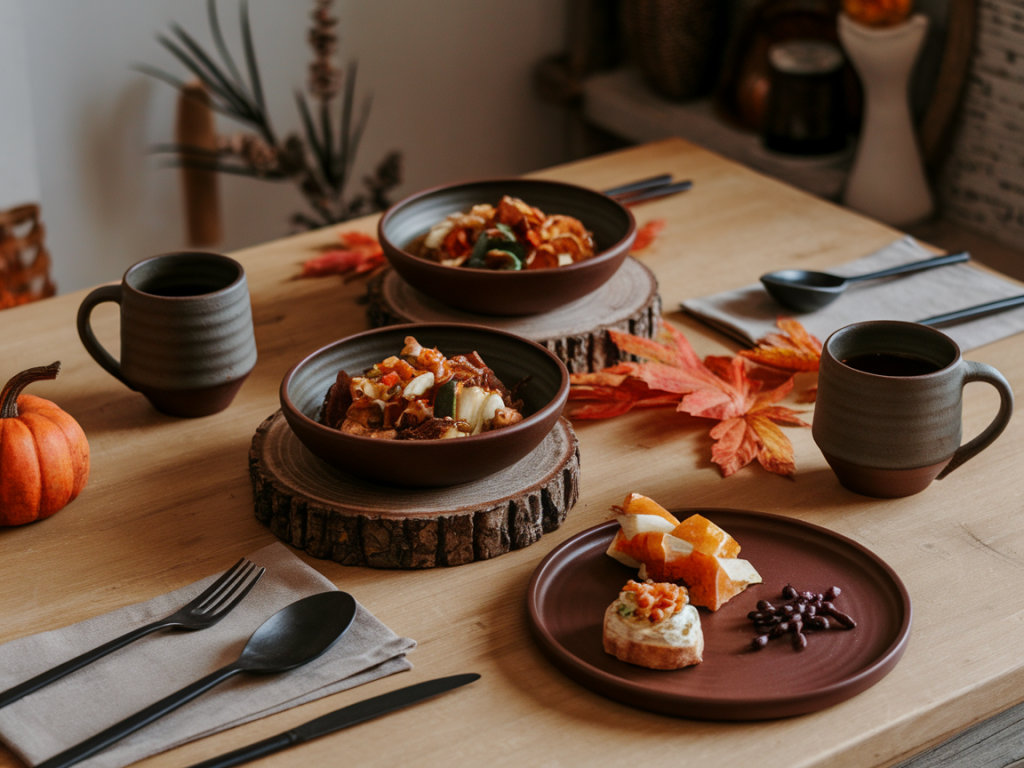
Autumn is my favourite season for hosting: the light softens, the evenings draw in and there’s something inherently cozy about sharing food when the world outside is cool and crisp. Recently I wanted to turn a neutrally styled dining table into an intimate supper for four that felt layered, tactile and effortless — and I decided to do it using just three ceramics from Thukthaeshop. The challenge was to keep the look cohesive and relaxed, while letting each ceramic piece do the heavy lifting.
Why limit yourself to three ceramics?
I often get asked: “Do I need lots of matching plates and bowls to set a beautiful table?” My short answer is no. Using a small, well-chosen set of ceramics encourages cohesion and reduces decision fatigue. With three complementary pieces — a dinner plate, a serving bowl and a dessert plate — you can cover all the practical needs of a supper for four while creating visual harmony. It also makes styling easier: each piece becomes a deliberate part of the composition.
The three ceramics I chose
For this table I used three Thukthaeshop finds that pair beautifully together:
Each piece has different scale and texture, which helps build layers. The warm dinner plate anchors each place setting, the bowl becomes the table’s tactile centre when used for sharing, and the dessert plate introduces a lighter tonal element.
Step 1 — Choose a simple base
I start by stripping the table back. For an intimate autumn supper, a neutral base lets seasonal accents sing. I used a plain linen runner in a muted ochre — just narrow enough to define a central aisle and wide enough to tuck under the serving bowl. Linen has that lived-in texture that feels cozy without looking fussy.
How to choose the base:
Step 2 — Layer your tableware
Place the Hand-glazed Earthenware Dinner Plate at each setting. I like them slightly offset from the chair so guests don’t have to move plates when they sit. Add the speckled porcelain dessert plate on top, slightly shifted so the edge of the dinner plate remains visible — this reveals colour contrast and depth.
Flatware should be simple and tactile. I chose matte brass knives and forks to add warmth and a hint of sheen without stealing attention from the ceramics.
Step 3 — Compose the centerpiece with the serving bowl
The Matte Stoneware Serving Bowl becomes the focal point. Instead of a single overblown floral arrangement, I like to fill the bowl with food-forward elements that double as decoration: roasted apples, small golden beets, thyme-sprigs and a scattering of hazelnuts. It looks delicious and invites guests to help themselves.
If you prefer flowers, opt for a low, loose arrangement in the bowl — think dried stems, seed heads, eucalyptus and a few deep-red blooms. Low is important here: you want faces to be visible around the table.
Step 4 — Add texture and small accents
Autumn is all about texture. I sprinkled a few textile and natural accents around the bowl and place settings:
These details make the table feel curated rather than staged.
Step 5 — Lighting that flatters
Good lighting transforms even the humblest table. For an intimate supper, I layered lighting:
My go-to candle placement is slightly forward of the serving bowl so the flame reflects off the glaze without obscuring food.
Step 6 — Serving and flow
Serve family-style from the matte stoneware bowl and encourage passing. This keeps the mood relaxed and gets everyone involved. Use serving spoons that contrast slightly — a wooden spoon against the matte glaze feels very tactile.
Think about plate-changing logistics: have a small side table or buffet where empty plates can be left, and a second smaller bowl for scraps if you’re serving hearty food. This prevents guests getting up mid-course.
| Item | Why I chose it | Substitute |
|---|---|---|
| Hand-glazed Earthenware Dinner Plate | Warm tone, substantial feel — anchors each place | Any warm-toned stoneware or terracotta plate |
| Matte Stoneware Serving Bowl | Large, matte surface for food and styling | Wooden serving bowl or brass if you want shimmer |
| Speckled Porcelain Dessert Plate | Lightens the setting and adds refinement | Small white plates with subtle patterning |
Common questions I get asked
People often wonder about mismatched ceramics. My answer: intentional mismatch works beautifully. Choose a dominant colour or material (here, warm glazes) and allow smaller pieces to vary in texture or finish. The key is repetition — repeat a colour or material at least twice on the table so the eye reads continuity.
Another question is about budget. You don’t need expensive ceramics to create impact. A single well-crafted serving bowl can be the star, while plates can be simple finds from local markets. Thukthaeshop focuses on thoughtful, affordable pieces for exactly this reason.
Final practical tips
Tablescapes are really about hospitality more than perfection. Using three carefully chosen ceramics from Thukthaeshop gave this supper a cohesive, lived-in feel that invited conversation and relaxed dining. If you’d like, I can share the exact product links and a shopping list for this exact setup from the boutique — just tell me if you prefer neutral, moody or colourful ceramics and I’ll tailor suggestions.