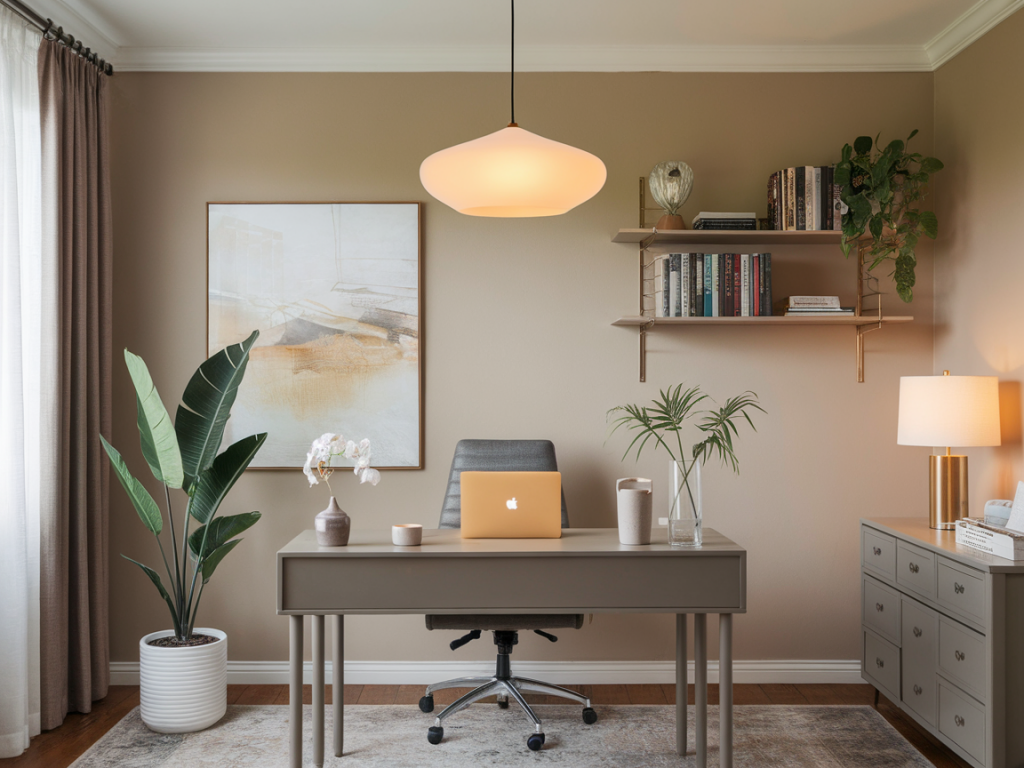
When I design a multifunctional home office, lighting is always the detail I fuss over longest. You can have the perfect desk, the coziest chair and a wall of inspiring art, but without the right light your space will feel flat or fatigue your eyes. Over the years of curating lighting for Thukthaeshop, I've learned that a well-chosen pendant paired with a dimmable bulb can create the kind of soft, focused task light that makes working, video calls and creative hobbies feel effortless.
What “soft task light” really means
Soft task light balances two needs: clarity for focused work and comfort for long hours. It should illuminate your desk surface evenly without harsh glare or deep shadows, and be adjustable so you can shift from concentrated work to relaxed reading or calls. For me, that means a pendant that directs light, combined with a bulb that has the right colour temperature, colour rendering and dimming behaviour.
Key factors I consider when choosing a pendant + bulb combo
Beam angle: Narrow beams (around 30°–45°) concentrate light on the work area, while wider beams (60°+) spread light more gently across the whole desk. For a single pendant over a desk, I usually pick a medium beam that offers a balance.Colour temperature (Kelvin): I recommend 2700K–3000K for a warm, comfortable feel that still reads colours well. If your work needs critical colour accuracy, 3000K with high CRI is a good compromise.Colour rendering (CRI): Choose bulbs with CRI ≥ 90 whenever possible. They make colours pop and reduce eye strain.Lumen output: For focused desk tasks, aim for 500–1,000 lumens from the pendant, depending on other light sources in the room.Dimmability and compatibility: Not all LED bulbs dim smoothly on every dimmer. Look for bulbs labelled “dimmable” and, when possible, the same brand or explicit compatibility with your dimmer switch.Glare control: A pendant with a shade, frosted diffuser or interior baffle will soften the light. I often choose pendants that hide the bulb from direct eye line.My go-to pendant styles for a multifunctional home office
Directed metal shades: A classic bell or cone pendant with matte interior gives focused light and a clean silhouette. It’s perfect when you want a task-focused pool of light.Opal glass or frosted globe: These spread a soft, even light and are great if your desk area doubles as a meeting space or creative table.Adjustable-arm or articulating pendants: If you frequently change your setup, a pendant with an adjustable arm lets you aim the light exactly where you need it.Layered mini-pendants: Two or three small pendants over a long desk can produce even coverage and a stylish look—especially in a narrow home office.Recommended bulb types and why I pick them
I almost always recommend modern LED bulbs because they’re efficient and available in a range of colour temperatures and CRI values. Within LEDs, here are my preferences:
Warm dim LEDs: These bulbs start at a warm 2700K when full brightness and shift slightly warmer when dimmed. They mimic incandescent behaviour and create a cosy atmosphere when you lower the light for a video call or evening reading.CRI ≥ 90 LEDs: For designers, makers or anyone who cares about colour accuracy, high-CRI bulbs are worth the small extra cost.Frosted LED globe (G125 / A19 frosted): A frosted globe in a pendant with an open bottom diffuses light to reduce sharp shadows while keeping enough direction for tasks.Filament-style dimmable LEDs: If your pendant has a visible bulb and you want a warm vintage look, pick filament LEDs that are dimmable and high-CRI. They look beautiful and work well for general tasks if the brightness is sufficient.A few tested pendant + bulb combos I love
Below are practical combos I've used in the studio and recommend for Thukthaeshop customers. The table shows typical specs so you can match them to your needs.
| Pendant | Bulb | Why it works |
| Matte metal cone pendant (directed) | LED warm-dim GU10, 7–9W, 2700K→2200K, CRI 90, 400–700 lm | Directs a focused pool of soft light; warm-dim function adds ambience for post-work hours. |
| Frosted opal glass globe | Frosted LED A19/G125, 8–12W, 3000K, CRI 90, 800–1,000 lm | Creates even, glare-free illumination—great when you need a calm background light for video calls. |
| Adjustable arm pendant | Dimmable filament LED 6–8W, 2700K, CRI 90, 600–800 lm | Flexible aiming with a visually warm bulb; good when you alternate tasks and materials. |
| Cluster of three mini pendants | Small dimmable LED globes, 5W each, 3000K, CRI 90 | Even coverage across long desks; dimmers let you set mood vs. focused task light. |
Practical placement tips I use in my own home office
Height above desk: Hang a pendant 28–34 inches (70–85 cm) above the desk surface for a single pendant. Lower if you want a cozier pool of light; raise slightly to reduce glare for multi-screen setups.Position: Centre the pendant over the main work area or slightly off-centre if you use multiple task zones (e.g., laptop on one side, sketch pad on the other).Control: Install a dimmer switch compatible with LED bulbs. I prefer smart dimmable bulbs or a smart dimmer so I can change scenes for “Focus,” “Video Call” or “Evening.”Choosing a dimmer — what to check
LEDs don’t all dim the same way, and a mismatched dimmer can cause flicker, buzzing or limited dimming range. When I specify a dimmer I check:
Manufacturer compatibility list (many bulb makers list compatible dimmers).Type of dimmer — leading-edge vs trailing-edge. Trailing-edge (electronic) dimmers often work better with LEDs.Minimum load — some dimmers need a minimum wattage to function properly; low-wattage LED setups sometimes need a dimmer designed for LEDs or a load capacitor.Styling and layering for a multifunctional space
A pendant and a dimmable bulb are a powerful duo, but the best results come from layering. I usually combine:
Ambient light — ceiling or wall lights to raise the overall room level.Pendant task light — the focused pool for desk work.Accent light — a small table lamp or LED strip behind the monitor to reduce eye strain and add depth.Layering gives you flexible scenes. For example, during deep work I’ll set the pendant bright and the ambient low; for video calls I’ll soften the pendant and turn on warm ambient lights to flatter skin tones.
Final considerations before you buy
Check the pendant’s bulb base and maximum wattage to ensure your chosen LED fits.Look for bulbs with clear dimming specs and a trial return policy in case you need a different brand or dimmer.If aesthetics matter, consider frosted or interior-painted shades to hide the bulb when it’s on and off.If you’d like, I can suggest specific pendants and bulb pairings from Thukthaeshop based on your desk dimensions, room size and whether you prefer warm vintage looks or cleaner modern lines — just tell me your room layout and what you mainly use the desk for.