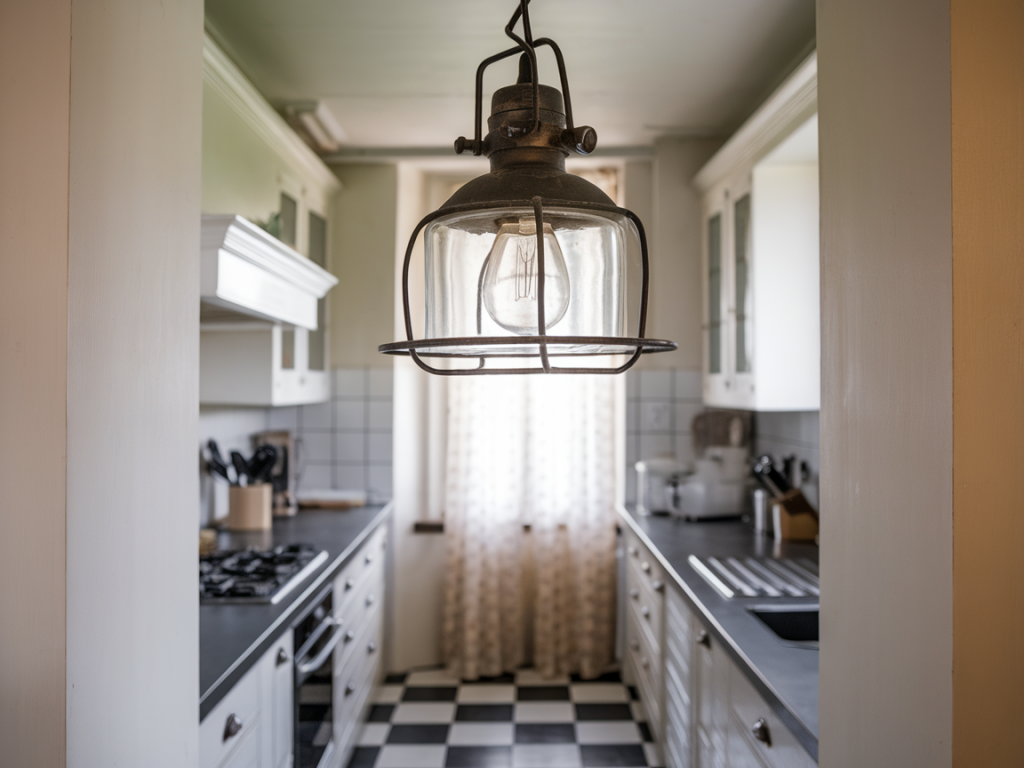
Choosing the right pendant for a narrow kitchen island is a balancing act between proportion, function and sightlines. I’ve styled enough kitchens to know that a pendant that looks beautiful on a styling board can feel intrusive in real life if it interrupts the view across the room or creates awkward visual barriers. Here I share the practical rules I follow, the pendant styles I reach for most often, and a handful of real-world product ideas that work above narrow islands without blocking the view.
Why sightlines matter (and what I mean by “blocking”)
By sightlines I mean the ability to see across the room when you’re standing at the island or sitting on a stool — for example, seeing the dining table, living room, kids playing, or an exterior window. A pendant that “blocks” sightlines can create visual chopping: it interrupts the connection between spaces and makes a narrow island feel more cramped. I always consider sightlines in homes where the kitchen opens onto living areas or where the island is part of a circulation route.
Quick rules I follow when selecting a pendant for a narrow island
Prioritize slim profiles: thin, elongated pendants or discs read visually light and don’t dominate the field of view.Keep pendants higher than usual: raising pendants slightly (within reason) preserves the line of sight while still providing task light.Choose low-visual-weight materials: glass, wire cages, or thin metal plates feel less heavy than chunky ceramic or dense wood.Consider multi-pendant rhythms: a row of small pendants spaced evenly can read as a design element without creating a solid visual block.Think linear when you can: linear pendants that run parallel to the island keep the eye moving rather than stopping it.Shapes that work best
Over narrow islands, these shapes tend to be the most forgiving:
Slim cylinders and rods — long and narrow, they give targeted task light without making a solid mass in the middle of the room. Examples: Tom Dixon’s Beat Slim, Muuto’s Ambit Pendant in elongated form.Mini globes — small globes in a series feel delicate; the eye reads them as multiple accents rather than one heavy object. Think of Schoolhouse Electric’s glass pendants.Flat discs and shallow shades — thin, wide discs can provide broad light while keeping a low profile. Flos’ Disk family or &Tradition’s Flowerpot VP9 (in a scaled-down diameter) are good references.Linear bars — perfect for islands that are longer than they are wide. A suspended linear LED fixture like the ones from Tekna or WAC Lighting keeps light focused along the prep area and preserves sightlines across a room.Height and spacing guidelines I use
There’s no one-size-fits-all, but these guidelines help me avoid blocking sightlines while ensuring usable light:
Standard hanging: 30–36 inches from the island surface to the bottom of the pendant for task lighting.To preserve sightlines: raise to 36–42 inches if you need to see across the room but ensure the pendant still provides adequate task illumination.For small globes or mini pendants: 28–36 inches works because they’re less visually obtrusive.Spacing for multiple pendants: divide the island length by the number of pendants + 1 to get even gaps; leave about 18–24 inches from each end of the island to the nearest pendant center. For narrow islands keep lateral spacing slightly wider to avoid crowding.Materials, finishes and light quality
I often choose materials that feel light and translucent to avoid visual heaviness. Clear and opal glass are my go-to finishes — they diffuse light softly and keep the fixture from feeling like a solid anchor in the space. Wire-cage pendants or thin metal shades painted in soft neutrals (matte black, off-white, warm brass) create presence without bulk.
Light quality matters: opt for warm white LEDs (2700K–3000K) for kitchen atmospheres and fixtures with good downlight for tasks. If the pendant is more decorative than task-oriented, make sure you pair it with under-cabinet or recessed lighting so the island is still practical to use.
When to choose one pendant vs. multiple
I generally reach for a single pendant when:
The island is very short (around 4–5 ft) and narrow; one slender pendant centered feels elegant and airy.You want a sculptural focal point and the rest of the kitchen is simple.I prefer multiple pendants when:
The island is longer than about 5–6 ft or when task lighting needs to be distributed evenly.You’re working with mini pendants or small globes — a row reads as design rather than clutter.Examples and product ideas I’ve used or recommend
Here are specific lights I like above narrow islands — each one respects sightlines in its own way.
Muuto Ambit Pendant (small size) — a delicate hand-blown look with a slim silhouette.Tom Dixon Beat Slim — elongated proportions, good for narrow islands where vertical presence is needed without bulk.Schoolhouse Electric's Opal Globe Pendants (mini) — excellent for three-in-a-row installations above longer narrow islands.Flos IC Lights (small) — minimal, sculptural, delightful when hung higher to preserve sightlines.Ferm Living Wire Pendant — airy and see-through, it gives presence but doesn’t block views.Linear LED channels (brands: Tech Lighting, WAC, Artemide) — ideal when you want continuous illumination along a narrow surface.Practical checklist before you buy
Measure island width, length and ceiling height.Stand at prep height and simulate the pendant location (I tape a rectangle on the ceiling or hang a lightweight object) to check sightlines from different positions.Confirm lumen output — islands need good task light, typically around 300–600 lumens per pendant depending on the number of pendants and other lighting in the room.Consider dimming: install a dimmer so the pendant can be both atmospheric and practical.Choose adjustable suspension: an adjustable cord or rod lets you tweak height after installation to perfect sightlines and function.Simple proportion table I often reference
| Island width | Pendant recommendation | Height bottom of pendant above island |
| Under 30" (narrow) | Single slim pendant or small globe | 34–42" (raise for sightlines) |
| 30–40" | Single narrow pendant or two small pendants staggered | 30–36" |
| 40–60" (long narrow) | Two or three minis in a row, or one linear pendant | 30–36" |
Styling tips that help maintain openness
Use clear or lightly frosted glass shades rather than opaque, heavy materials.Match pendant color to the ceiling or background to make it recede — a matte off-white fixture on a white ceiling will be less obtrusive.If you want drama without visual bulk, go for sculptural yet thin silhouettes (wire frames, rings, rods).Balance vertical elements elsewhere: if your pendant is long and vertical, keep cabinetry lines horizontal to avoid a cramped feeling.Choosing a pendant for a narrow island is about restraint and intention. I always test the visual weight in the space (even temporarily with a mock-up) before making a final decision. With the right scale, material and placement, a pendant can enhance an island’s function and beauty without ever getting in the way of the view.