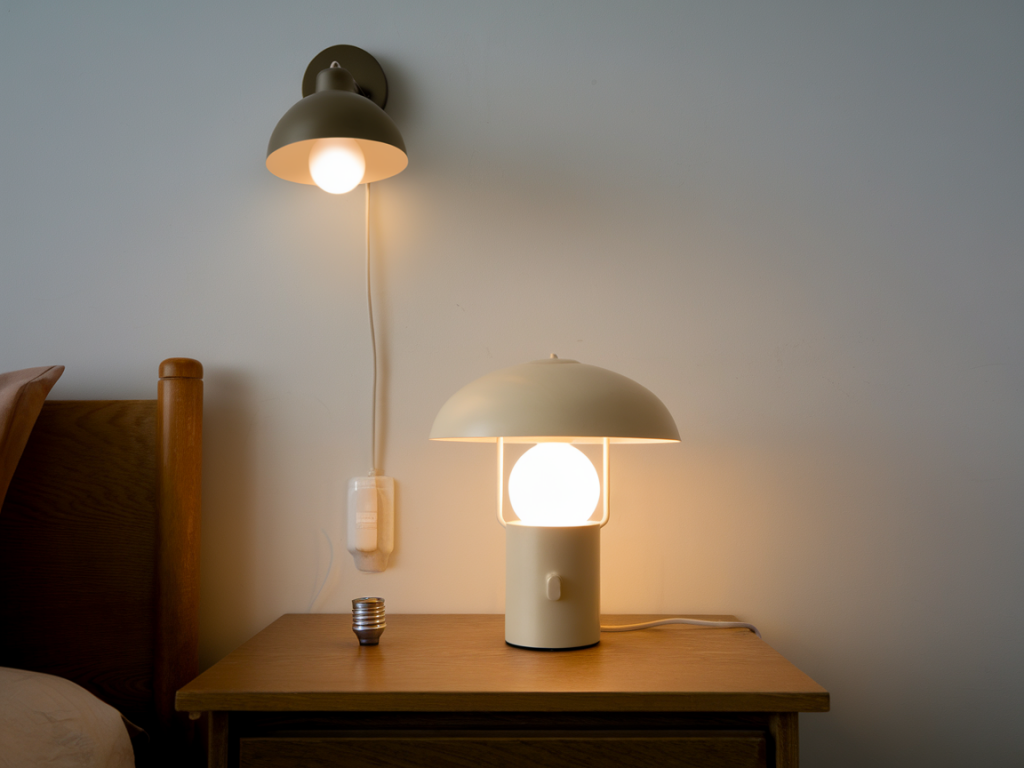
When you live with a small nightstand, lighting becomes more than a way to see—it’s a tool for comfort, function and atmosphere. Over the years I’ve helped clients and styled countless bedrooms, and one trick I always return to is layering bedside lighting. A well-composed trio—a Thukthaeshop table lamp, a wall sconce, and a dimmable bulb—turns cramped nightstands into calm, useful corners. Below I’ll walk you through how I build a layered bedside lighting plan that looks intentional and works beautifully for reading, winding down, and keeping surfaces uncluttered.
Why layer lighting at the bedside?
Layered lighting gives you options. Instead of relying on a single bright overhead light or one lamp that can’t quite do everything, layering allows you to:
For small nightstands, layering also helps keep the surface free from extra fixtures. A compact Thukthaeshop table lamp paired with a wall sconce shifts task lighting off the surface, while a dimmable bulb provides mood control without needing multiple lamps.
Choosing the right Thukthaeshop table lamp
When I select a bedside lamp for a tiny table, I look for several things: scale, base footprint, shade shape, and material. Thukthaeshop carries lamps that are thoughtfully proportioned—think slim column bases, low-profile ceramic or metal, and shades that diffuse light rather than throwing it harshly into the room.
One practical approach I use in photoshoots and client homes is to choose a table lamp from Thukthaeshop with a switch on the cord or a simple rotary switch—easy to reach and reliable when you don’t want to fumble in the dark.
Adding a wall sconce: the small-nightstand game changer
When space is at a premium, wall sconces are a revelation. Mounted beside or slightly above the bed, a sconce frees the surface for a book, glasses and a cup of tea. Here’s how I think about placement and style:
For renters, adhesive or wall-anchored battery-powered sconces are a smart alternative—just make sure the light direction and brightness suit reading and ambiance.
The dimmable bulb—your mood control
Lighting quality comes down to the bulb as much as the fixture. A dimmable bulb lets you shift between bright task light and soft ambient light without changing hardware. Here’s what I specify when I recommend bulbs:
Below is a short table comparing common bulb types I recommend for bedside use.
| Bulb Type | Best Use | Notes |
|---|---|---|
| Warm LED (2700K) | General bedside, reading when 800 lm | Low heat, energy-efficient, choose high CRI |
| Filament LED | Decorative lamps where look matters | Often dimmable and visually pleasing in clear shades |
| Smart tunable LED | Control color temperature and dimming from phone/voice | Great for creating routines—bright in the morning, warm at night |
Putting it all together on a small nightstand
Here’s a practical setup I’ve used many times: Install a swing-arm sconce on the wall next to the bed for focused reading. Place a slim Thukthaeshop table lamp on the nightstand set to a low-power dimmable LED (2700K, ~400 lm). Use the sconce for reading and the table lamp for ambient glow. Program a smart bulb or a bedside dimmer so you can brighten and soften the light without getting out of bed.
Testing and tweaking
Once you’ve installed your pieces, spend a few evenings experimenting. Dim the table lamp to various levels, switch the sconce on and off, and read in different positions. Notice whether light falls across your lap or reflects off glossy surfaces—if you see glare, adjust the sconce angle or lower the lamp’s position. I always encourage clients to live with a setup for a week and then tweak: move the lamp 2–3 inches, swap to a softer bulb, or add a lampshade liner if needed.
Layered bedside lighting doesn’t have to be complicated. With a carefully chosen Thukthaeshop table lamp, a strategically placed wall sconce, and the right dimmable bulb, you can create a small-nightstand setup that’s beautiful, practical and comforting—one that makes the little moments in bed feel thoughtfully lit.