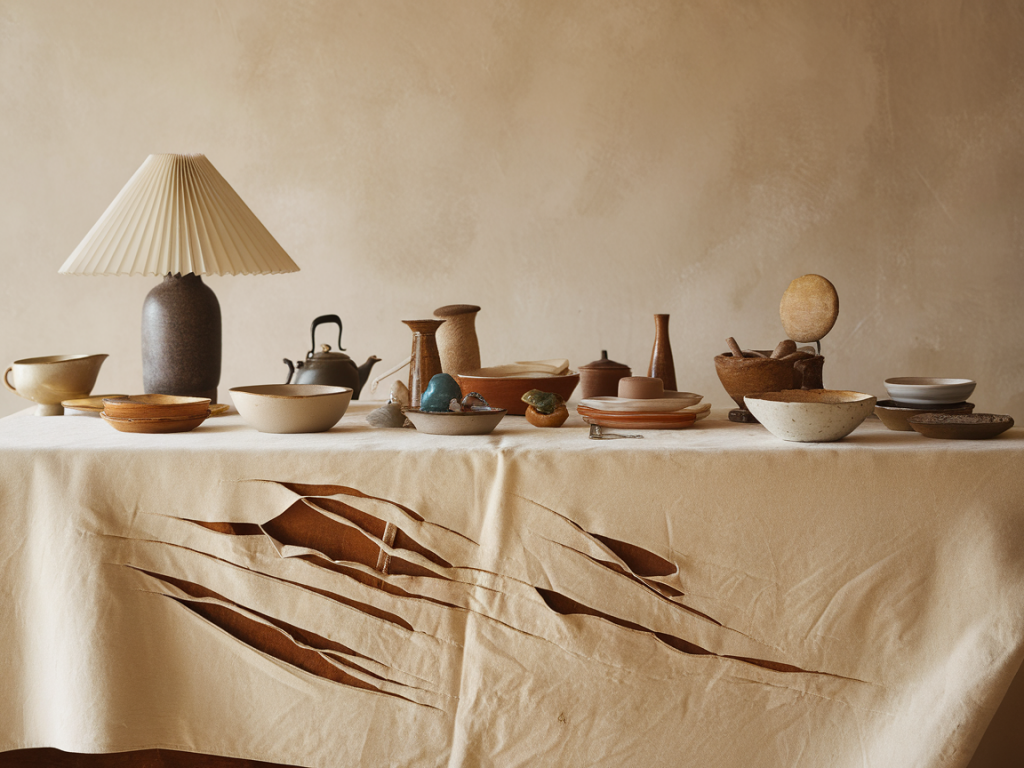
I remember the first time I noticed the long scratch across my dining table: an afternoon of unpacking deliveries, a rushing hand, and a moment that left a bright white line across the wood. As someone who curates beautiful surfaces for a living, I felt that familiar little pang—then I reminded myself that a scratched table is a story, not the end of the world. You don't always need to sand or refinish to make a table look cared-for and intentional. With the right textiles and tableware—many of which I select for Thukthaeshop—you can hide, distract from, and even celebrate imperfections.
Why textiles and tableware are your best tools
Textiles add layers, texture and warmth; tableware provides focal points and structure. Together they work like a visual umbrella, redirecting attention from a scratch to a curated vignette. I often use a combination of runners, placemats, layered linens, and statement centerpieces to create balance. The goal isn't to hide the table entirely but to make the eye land on something else—an artisanal runner, a stack of beautiful plates, or a cluster of candles.
Assess the damage and plan your approach
Before styling, take a breath and ask a few quick questions:
Once you know these answers, you can decide whether you want to camouflage the scratch permanently (by covering high-traffic areas) or momentarily (for a dinner or event).
Layering with runners and tablecloths
Runners are my go-to because they cover the central axis—where many scratches live—while still revealing and celebrating the table's surface. I keep several styles on hand: a lightweight linen runner for summer gatherings, a chunky woven runner for winter, and a printed narrow runner that adds personality without hiding the whole table.
Here are a few strategies:
Placemats, chargers and strategic plate placement
Placemats and chargers are practical and decorative. They create defined zones and are indispensable when the scratch lies where people eat.
Napkins: small items, big impact
Napkins are one of my favorite “low-cost, high-return” pieces. A folded linen napkin placed directly over a minor scratch will not only hide it but add softness and color. I like using napkin rings or tying with twine to introduce another textural element. On Thukthaeshop you'll find hand-dyed linens and artisanal napkins that are perfect for this purpose—durable enough for daily use and pretty enough for special dinners.
Create a focal point with centerpieces
A thoughtful centerpiece directs attention away from table flaws. Here are combinations that work well:
I often mix items from different makers for richness: a hand-thrown vase with sculptural taper holders and a rustic wooden tray. The juxtaposition of shapes and textures gives the table a collected, curated feel so guests focus on the composition rather than the scratch.
Use colors and patterns strategically
Contrasting colors and small-scale patterns help mask imperfections. A patterned runner or a set of mottled stoneware plates distracts the eye more than a flat, solid color. Earthy tones and washes (think terracotta, deep olive, indigo) camouflage scuffs better than very light or satin finishes, which can actually highlight scratches.
Quick fixes for surface-level scratches
If the scratch is shallow and you want a subtle fix without sanding, try these simple at-home touches:
These are not permanent repairs but are quick and effective for short-term fixes—particularly before guests arrive.
Make it part of the story
Sometimes I lean into the imperfection. A well-placed etcher's scratch becomes part of the table’s history when you design around it: add a handwritten name tag at that spot for a quirky touch, or display a small framed photo and a ceramic bowl to make that area look intentionally styled. People love a space that feels lived-in and authentic; scratches can enhance that narrative.
Products I reach for from Thukthaeshop
When I want to hide or distract from table marks, I often pull from my own shop's selection. A few favorites:
All these pieces are chosen for quality and provenance, and because they work together to create atmospheres that feel personal and considered.
If you want suggestions tailored to your table—dimensions, color palette or the severity of the scratch—send me a photo via the contact page on Thukthaeshop. I love matching textiles and tableware to real-life surfaces; it's one of my favorite parts of curating.