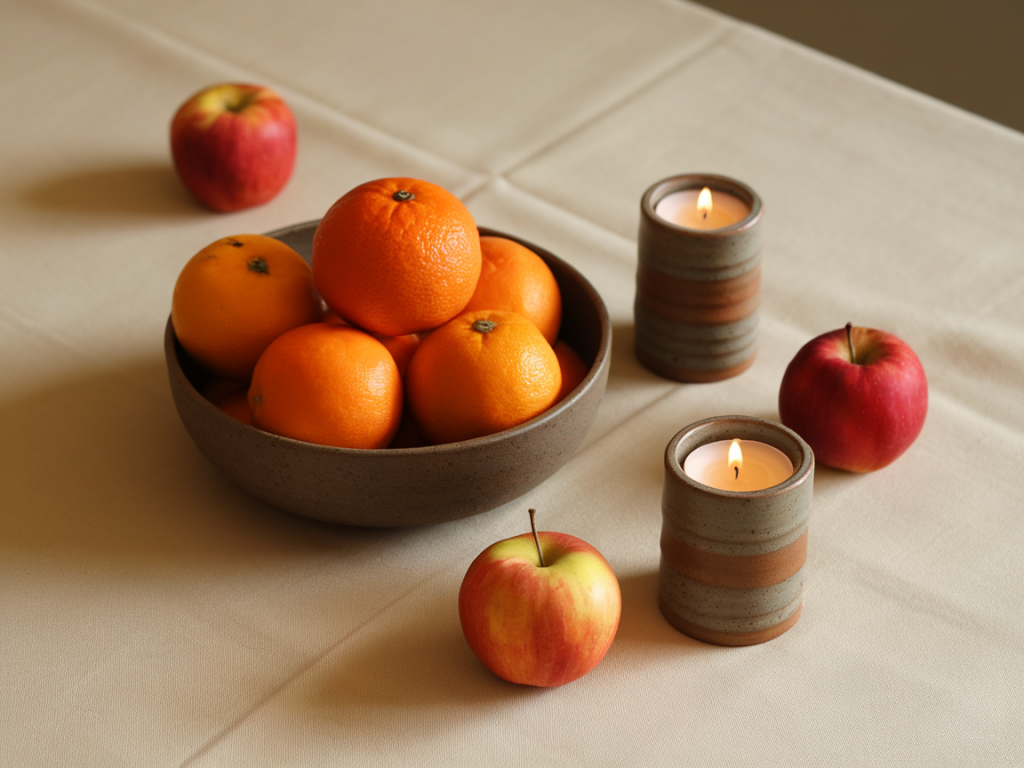
When I set out to style a minimalist autumn centerpiece for a table for four, I always start with a simple question: what three ceramics can carry the look without overwhelming the table? For me, the answer is less about matching and more about complementing — choosing three pieces that vary in scale, texture and function so they read as a thoughtful composition rather than a collection. Below I’ll share the trio I reach for again and again from Thukthaeshop, how I arrange them, and the little touches that make a pared-back autumn table feel warm, considered and easy to live with.
Why three?
People often ask why I don’t use just one statement piece. The truth is, three creates balance. Two can feel like a pair without rhythm; four can become fussy. Three offers a dynamic triangle of forms and heights that draws the eye but preserves the calm minimalism I love. It also allows me to introduce a mix of function: one vessel for flowers or foliage, one low dish for seasonal elements, and one candleholder or sculptural object to anchor the arrangement.
The three ceramics I choose
For a minimalist autumn centerpiece on a table for four, I usually combine the following pieces from Thukthaeshop’s selection:
| Piece | Role | Why it works |
|---|---|---|
| Hand-thrown matte stoneware vase (tall) | Vertical anchor — holds a few stems or dried grasses | Clean silhouette, soft neutral glaze, subtle thrown lines add texture |
| Shallow speckled serving bowl | Low horizontal element — holds small pumpkins, nuts, or moss | Broad footprint balances the vase; speckle adds organic depth |
| Small tapered ceramic candleholder | Light source and sculptural punctuation | Slender profile introduces height variation and intimacy with candlelight |
These three roles — tall, low, and lit — are my shorthand for composing any small table arrangement. The specific pieces from Thukthaeshop I reach for tend to be within the same tonal family (warm greys, oatmeal, soft white) but with subtle surface differences so they read as a set without being identical.
How I arrange them on a table for four
Placement is about proportion and conversation flow. Here’s my process:
When you're arranging, step back and look from a seated position. You want everyone at the table to see each other — so keep the tallest stems no higher than eye level when seated, and prefer narrow, vertical foliage over wide bouquets.
Choosing foliage and seasonal accents
Autumn is not only about colors; it’s about texture. For a minimalist approach I favor small clusters of materials that read calm from a distance but reveal detail up close.
Lighting and candle safety
People ask whether candles are essential. For me, yes — tapers or a ceramic votive add intimacy. But safety and simplicity are key:
Questions readers often ask
Here are brief answers to common concerns I hear when people try this look for the first time:
Styling variations to try
Once you’ve mastered the basic trio, experiment:
Creating a minimalist autumn centerpiece is about restraint and storytelling. With a tall hand-thrown vase, a shallow speckled bowl and a slender ceramic candleholder from Thukthaeshop, you get a composition that's adaptable, tactile and quietly seasonal. The three-piece approach gives you structure while leaving room for small, personal touches — a hand-written place card, a sprig at each setting, or a piece of woven linen to soften the table. Try it, take a photo from above and from the seated perspective, and adjust until it feels effortless and inviting.