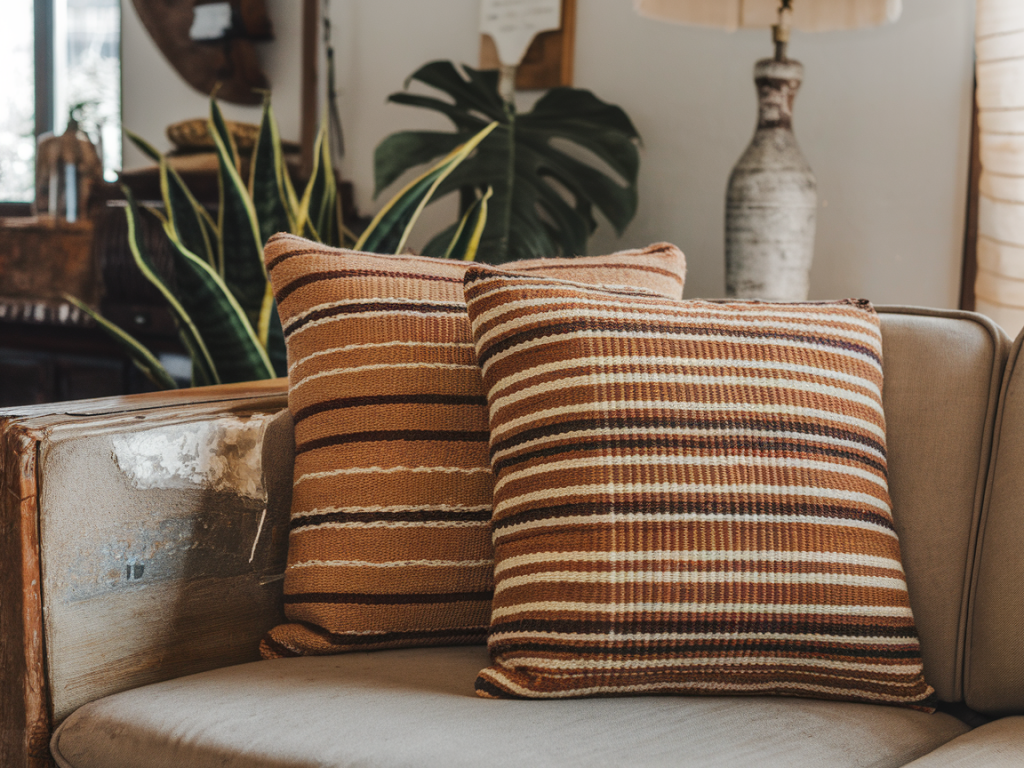
I love cushions—especially handwoven ones—for their ability to transform a sofa, add warmth and personality, and, yes, gracefully hide the inevitable signs of life: pet-worn arms, scratches, and flattened corners. When a beloved cat or dog has claimed a spot on the armrest, the trick isn’t to cover it with something clumsy or off-tone, but to create a layered, intentional cushion composition that reads like design rather than camouflage. Below I share my favorite handwoven cushion combinations and practical tips to conceal a pet-worn sofa arm while keeping a cohesive color story.
Start with a color story, not a cover-up
Before picking cushions, I always decide on a small palette—three to five colors that sit well with the sofa and the room. For a neutral sofa I might choose warm terracotta, soft oat, and deep forest green; for a bold navy sofa I’ll pick mustard, soft blush, and sand. The cushions should feel like they belong together, so even when one is functionally hiding damage, it reads as part of a composed vignette.
Layer textures for depth and disguise
Handwoven textiles are perfect because texture does a lot of the visual work. I combine at least three different textures: a chunky weave (such as kilim or boucle), a medium-weight woven (like cotton-linen ikat or handloom), and a smooth ground (linen or cotton canvas). The tactile contrast distracts the eye from imperfections and creates shadow and dimension that mask worn edges.
- Chunky weave: places near the armrest—draped and slightly overhanging—to soften the silhouette.
- Medium weave: anchors the group; often square and slightly larger.
- Sleek or smooth: used behind or at the back to visually elongate the seat and balance texture.
Size and shape matter
Mix sizes to create purpose. For hiding a pet-worn arm I usually use a tall lumbar cushion (40x60 cm or 14x24 in) placed lengthwise along the arm, with two larger squares (50x50 cm) slightly overlapping it. The lumbar acts like a soft bolster and conforms to the arm’s curve; the larger squares disguise any bulging or flattened foam beneath.
- Lumbar or bolster: excellent for arm coverage and for pets who like to rest their head on cushions.
- Square 50x50 cm: gives presence and structure; use one patterned and one solid.
- Smaller 30x50 cm or a 40x40 cm accent: adds scale variation and a finishing touch.
Pattern play—how to pair without chaos
I love a small graphic pattern paired with a larger scale geometric or stripe. When choosing patterns, I stick to the color story and vary scale:
- Small-scale pattern: a handwoven ikat or repeat motif—good for layering in front.
- Large-scale pattern: a bold stripe or oversized check—used on one cushion to anchor the group.
- Solid with texture: a slubby handloom or boucle—this becomes the neutral that ties patterns together.
A practical pairing I use often: a handwoven indigo ikat (small pattern), a warm ochre stripe (large scale), and a cream slubby weave. The eye sees rhythm and balance rather than the sofa’s imperfections.
Placement techniques that look intentional
How you arrange cushions makes a difference. For concealing a worn arm I arrange as follows:
- Place a lumbar cushion aligned with the armrest so it wraps the worn area.
- Set a larger square cushion slightly angled in front of the lumbar—this hides any seam or torn fabric on the arm’s top surface.
- Add a smaller accent cushion to fill any gap between the arm and the seat back; tuck it in so the group feels organic.
- If needed, drape a handwoven throw casually over the arm first (folded lengthwise) then place cushions—this gives an extra layer of disguise and a lived-in look.
Practical fabric choices for homes with pets
Some weaves hide hair and wear better than others. I test pieces before committing and prefer specific fibers for durability and look:
| Fabric | Why I use it | Drawbacks |
|---|---|---|
| Wool handwoven | Natural resilience, hides marks and hair, matt texture for camouflage | Can attract claws if loose loops present; needs occasional vacuuming |
| Cotton-linen blend | Soft, breathable, easy to launder; lovely slub and natural tones | Shows oil stains more readily; may wrinkle |
| Thicker handloom cotton | Durable, simple to spot clean, great for structured cushions | Lighter colors show hair more; less forgiving than wool for heavy wear |
| Jute or hemp accents | Adds rugged texture; excellent for contrast pieces | Rougher hand; not ideal if your pet loves to nestle into cushions |
Care and practical tips
Hiding is one thing—keeping things fresh is another. Here are the routines I recommend:
- Use removable covers where possible. Handwoven covers with an inner cushion are easier to wash or rotate.
- Rotate cushions weekly to distribute wear. I swap the armrest set with the opposite side on a weekly or bi-weekly basis.
- Keep a lint roller or pet-hair brush near the sofa for quick touch-ups—doing this after a nap keeps the group looking tidy.
- For persistent claw marks, tuck a throw over the arm and secure it with one cushion—this becomes an intentional textural detail rather than a repair job.
- Consider double-layering covers (a thin inner slip under a decorative cover) if your pet claws frequently—this protects the decorative cloth and is easier to mend.
Real combinations I love from handwoven collections
Here are three assembled looks I often style at home and with clients. They work equally well on a neutral or colored sofa:
- Warm neutrals: cream slubby linen square (50x50), rust-orange handwoven stripe (50x50), oat-toned wool lumbar (40x60). Add a soft throw in a similar oat tone.
- Coastal calm: indigo ikat small pattern (50x50), sand-colored handloom cotton (50x50), navy wool lumbar (40x60). Drape a thin indigo throw over the arm for layering.
- Modern contrast: deep forest green boucle (50x50), mustard handwoven stripe (50x50), neutral hemp lumbar (40x60). Use a small leather-trimmed cushion for a finishing pop.
When I style cushions to conceal wear, I think of it as editing—choosing pieces that tell the same visual story as the rest of the room. Handwoven cushions are forgiving, tactile and full of character, so they become allies when pets and furniture share a life together. If you’d like, I can put together a short selection of pieces from Thukthaeshop that would work with your sofa color—tell me the sofa’s color, size and whether your pet prefers the arm or seat, and I’ll sketch a quick combination for you.