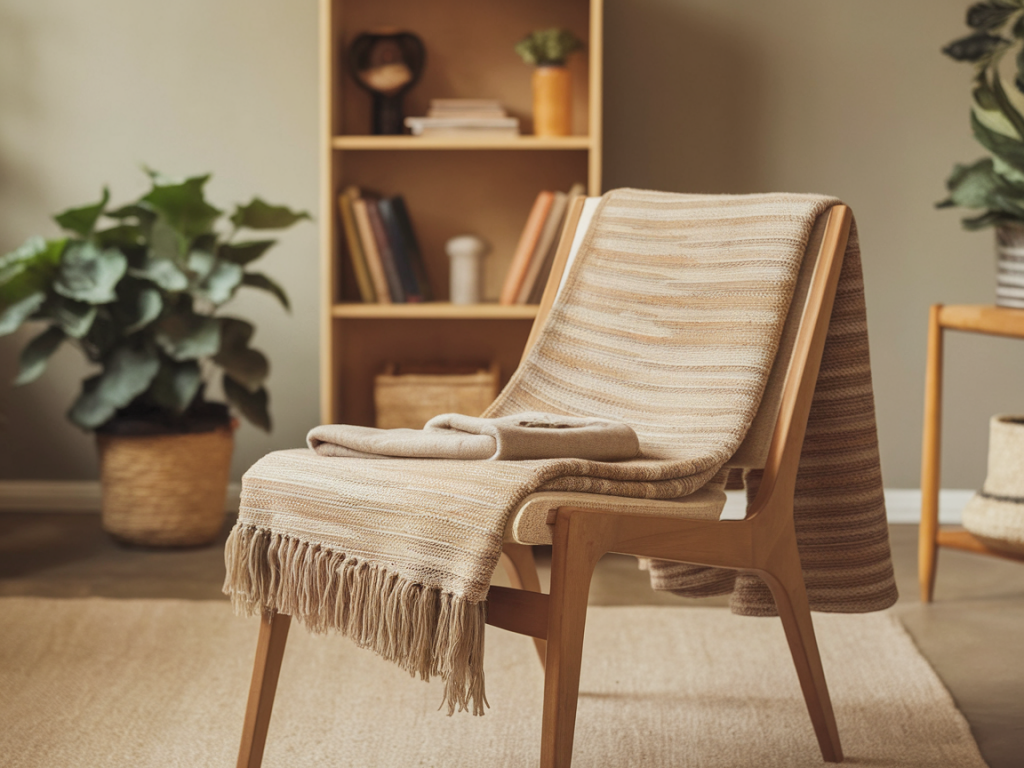
As someone who lives and breathes textiles, I'm often asked the same question: how can a throw feel cozy without turning you into a sweaty cocoon? I love a blanket that invites lingering on the sofa, not one that forces me to peel it off after ten minutes. Over the years of curating for Thukthaeshop, I’ve learned to read the subtle language of fibers, weave and weight — and I want to share that with you so you can choose a textured throw that keeps you comfortably warm, never overheated.
Why texture matters as much as material
Texture does more than make a throw look good draped over a chair. The surface structure — whether a loose looped knit, a tight basketweave, or a plush rib — affects air circulation and insulation. A chunky cable knit can trap heat in large pockets, making it very warm but sometimes too stifling for milder evenings. By contrast, a linen-blend slub throw or an open-weave cotton has little channels of air that help regulate temperature.
When I choose textured throws for the shop, I balance tactile appeal with breathability. The best pieces feel substantial without being smothering: they hug you, allow your skin to breathe and shed a little heat if your body warms up.
Materials that keep you warm — but not hot
- Merino wool: finer and less insulating than chunky lambswool, merino has natural thermo-regulating properties. It warms but breathes and rarely irritates sensitive skin.
- Cotton: lighter and highly breathable. Textured cotton throws (think waffle or dobby weaves) provide cozy surface warmth without trapping too much heat.
- Linen blends: pure linen can feel cool, but when blended with cotton or viscose and woven with texture, it becomes a perfect transitional throw — slightly insulating but airy.
- Alpaca blends: alpaca is warm and lightweight with excellent moisture-wicking; blended with cotton or silk it can be luxurious and not overly insulating.
- Recycled or technical fibers: modern blends that include modal, tencel or recycled polyester can offer softness, breathability and easy care while maintaining texture.
Weave and weight — the practical guide
When I recommend a throw, I look at two practical things: the weave/open-ness and the GSM (grams per square meter) if available. If a throw has a loose, open weave or airy knit, it will feel lighter on the body even if it looks chunky. Dense, tightly woven throws retain more heat.
- Open weaves / waffle / gauze — best for mild climates and for people who run warm. They trap small pockets of air for gentle insulation.
- Mid-weight knits / basketweave — my go-to. These give a cozy feel for chilly evenings without becoming oppressive indoors.
- Heavier chunky knits — choose only if you need serious warmth, for very cold nights or outdoor use. Not ideal for beds in centrally heated homes.
Throws from Thukthaeshop I reach for most
Below are a few textured throws I’ve selected for Thukthaeshop that consistently deliver warmth without overheating. I include why I love each one and when I use it.
| Throw | Material | Texture / Weave | Best for |
|---|---|---|---|
| Soft Loop Cotton Throw | 100% organic cotton | Loose looped terry / waffle | All-season sofa throw; perfect for warm sleepers |
| Fine Merino Rib | Lightweight merino wool | Fine rib knit | Cool evenings and layers on the bed |
| Linen Slub Throw | Linen-cotton blend | Slubby open weave | Transitional seasons; breathable and textured |
How I use layering to avoid overheating
Layering is the secret I recommend more than any single throw. Instead of one thick blanket, I often layer a lighter textured throw over a heavier base when needed. That way you can shed a layer easily. My favourite combo for evenings is a mid-weight merino or cotton blanket as the base, topped with an airy linen or cotton textured throw for surface softness. If I get warm, removing the top layer leaves a breathable base that still feels cosy.
Design tips: choose texture to match purpose
- If you want a throw for afternoon naps in a heated living room, pick a lightly textured cotton or linen blend.
- For bedrooms where central heating kicks in overnight, choose merino or alpaca blends in a finer knit so you can sleep comfortably.
- Outdoor or balcony use calls for durable textured throws with weather-resistant blends; choose open weaves that dry quickly.
Care matters for performance
How you wash and maintain a throw affects both its loft and breathability. Natural fibers like merino and alpaca benefit from gentle hand wash or cold wool cycles and flat drying — this preserves the textures that provide airflow. Linen and cotton are generally machine-washable but avoid high heat tumble drying, which can compress texture and reduce breathability.
For blends with technical fibers follow the care label — many modern mixes are designed to hold their shape and texture after repeated washes, making them ideal for everyday use.
Questions I often get from customers
- Q: Will a textured throw make me itch?
A: Not usually — finer fibers like merino or good-quality alpaca are soft against skin. If you’re sensitive, look for cotton-linen blends or throws labeled as “next-to-skin safe.” - Q: Can I use these throws in bed?
A: Absolutely. For beds I recommend finer knits or linen blends layered over a duvet — they add visual texture and comfort without causing overheating. - Q: How do I pick a color?
A: Texture shows up beautifully in neutral tones. Choose contrasts between your sofa and throw for visual depth; textured neutrals age well and remain versatile.
At Thukthaeshop (https://www.thukthaeshop.com) I choose textured throws with an eye for both tactile pleasure and practical performance. Whether you prefer an airy linen slub or a lightweight merino rib, it's the combination of material, weave and how you layer it that keeps you warm without ever feeling overheated. If you want help picking the right option for your home or sleeping habits, send me a note via the contact page — I love matching finds to real-life needs and spaces.