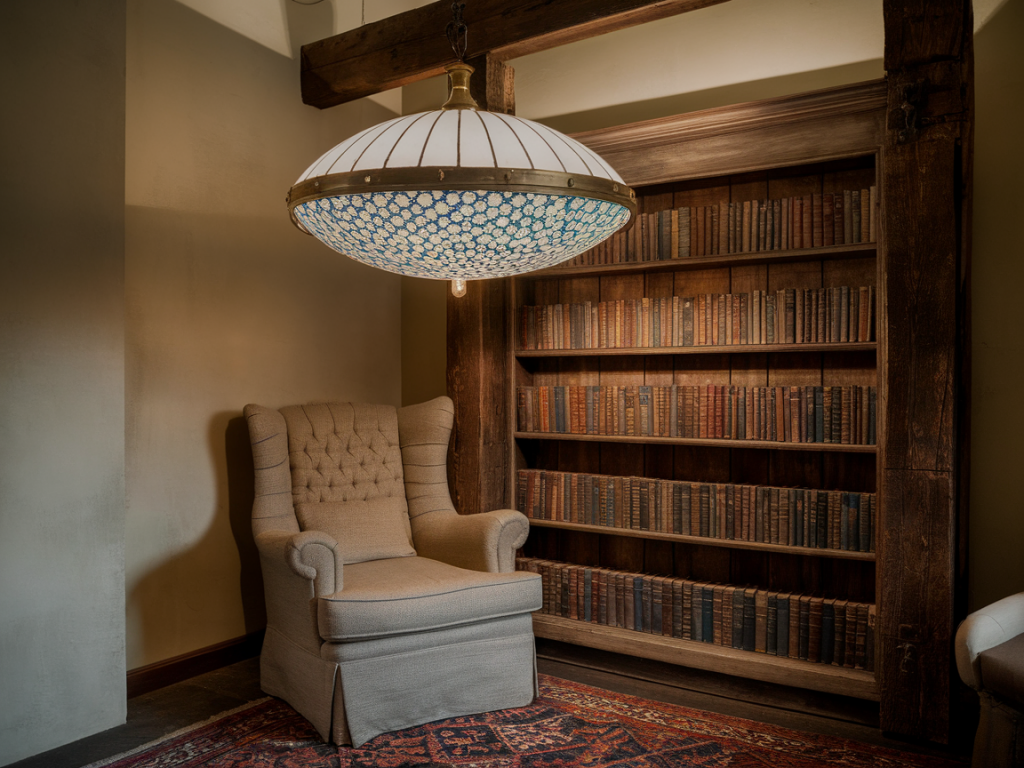
I love a good reading nook. There’s something about a well-lit corner that invites you to curl up with a book and stay a while. Over the years I’ve tested dozens of pendant lights above chairs, daybeds and window seats—some worked beautifully, others felt wrong for the space. In this post I’ll share the practical, styling and technical tips I’ve learned to help you choose the perfect pendant light for a cozy reading nook.
Think first about function: task light vs ambient light
Before you fall in love with a shade, ask yourself what you need the light to do. For a reading nook you usually want a task light—something that casts focused illumination onto your book without creating harsh glare or deep shadows. But I also like to layer: a task pendant combined with soft ambient lighting (table lamp, wall sconce or floor lamp) creates depth and a more forgiving, lived-in atmosphere.
If you prefer a single light source, look for a pendant with a directed beam and a shade that shields the bulb from direct view. If you want a more diffused glow, choose a pendant with a fabric or frosted glass diffuser.
Scale and proportion: size matters
Scale is the most common mistake I see. A pendant that’s too large will overwhelm the nook; too small, and it looks lost. As a quick guide:
These are starting points—adjust for your ceiling height and the visual weight of the fixture. A delicate brass pendant can read smaller than a bulky ceramic shade of the same diameter.
Ceiling height and hanging height: get the drop right
Hanging height determines comfort and light distribution. As a rule, for a reading nook where you sit, I aim to have the bottom of the pendant sit between 90–120 cm (35–47 in) above the seat surface. This keeps the light close enough for reading without interfering with sightlines or bumping heads.
For lower ceilings, choose a compact or semi-flush pendant. For high ceilings, you can play with longer cords or adjustable suspension rods—just be careful not to hang the light so low it obstructs the view out of a window or feels heavy over the space.
Light direction and shade shape
Shade shape determines how light spreads. Here are a few options I reach for depending on mood:
Bulb type, lumen output and color temperature
Choosing the right bulb is as important as choosing the fixture. Today I always recommend LED bulbs for efficiency and lifespan, but there are a few specifics to consider:
| Bulb Type | Best For | Typical Lumens |
|---|---|---|
| LED (warm white, 2700K) | Everyday reading, energy-efficient | 400–1200 lm |
| Filament LED | Visible bulb, vintage look | 300–800 lm |
| Halogen / Incandescent | Warm color, but less efficient | 400–1000 lm |
Dimming and controls
A dimmer is a small investment that transforms a reading nook. Dimmable LEDs allow you to lower brightness for cozy evenings without losing the option of bright task light when you need it. Make sure the pendant and bulb are both rated dimmable and that your dimmer is compatible with LED loads. Smart bulbs are another flexible option—they give instant tunability of brightness and sometimes color temperature via phone or voice control.
Materials and finish: choose something that ages well
Materials influence the mood of a nook. I tend to match the pendant finish to other metals in the room (brass with warm wood, black iron with industrial accents, soft matte ceramic with linen textiles). Consider maintenance too: textured shades gather dust differently than smooth glass. If the fixture will be near a window, pick materials that won’t fade quickly.
Mounting style and practicalities
There are different ways to mount a pendant:
Consider access to wiring and whether you want a hardwired fixture or a plug-in option. Plug-in pendants are great for renters—just be mindful of visible cords and how they’ll run along the wall.
Style choices: coordinate without matching
Styling the pendant should feel cohesive rather than overly matched. If your nook is Scandinavian-inspired, a simple white globe or bentwood pendant feels right. For a vintage-inspired corner, look at brass or ceramic fixtures with warm filament bulbs. I love mixing eras: a modern cone pendant over a vintage wingback chair creates an interesting contrast.
Brands and recommendations I like
Here are a few fixtures and brands I often recommend when clients want quality and good design at different price points:
How I test a pendant in a nook
When I’m sourcing or testing a pendant for Thukthaeshop, I follow a short checklist:
Doing this quickly saves you from a light that looks lovely in the catalogue but is impractical in your corner.
Small stylistic tips that make a big difference
Choosing the right pendant for a reading nook is a mix of measurement, mood and a few practical checks. When the scale, bulb and placement are right, a single pendant can turn a corner into a cherished spot you’ll use every day.