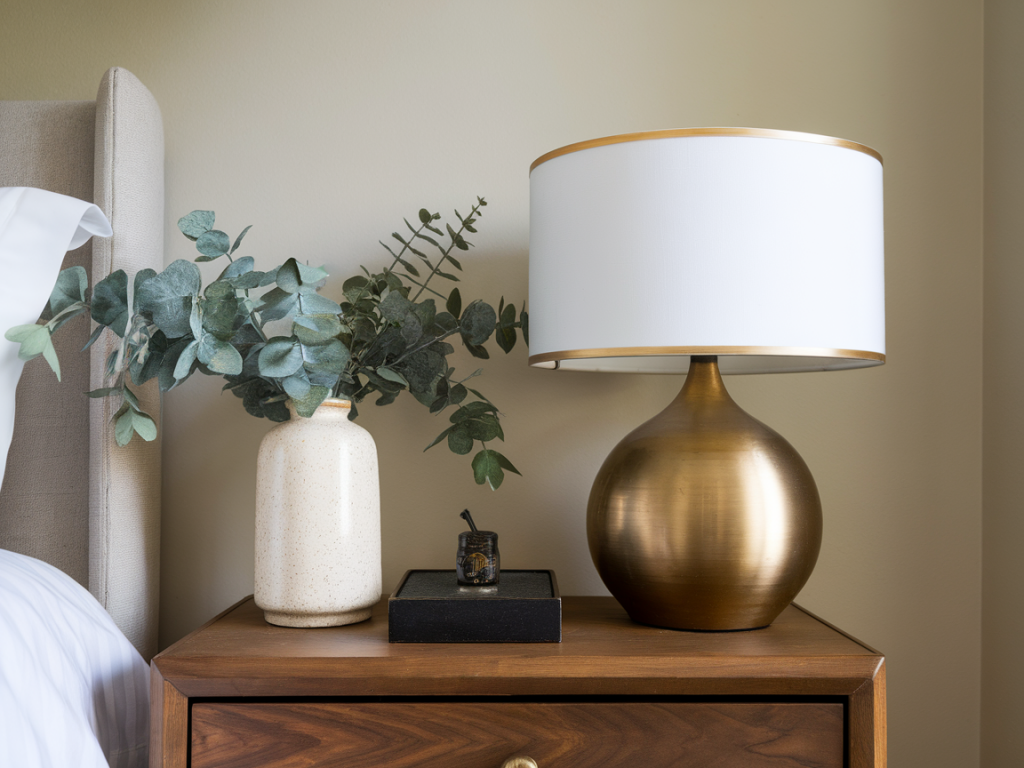
I have a soft spot for bedside lighting — it’s one of those small details that instantly makes a bedroom feel edited and welcoming. A statement lamp beside your bed can lift the whole vignette, serve practical needs and double as an object of art. Over the years, curating the lighting selection for Thukthaeshop taught me to look beyond looks: a truly great bedside lamp balances scale, function and texture. Here’s how I choose one that makes my bedside look deliberately curated, not accidental.
Start with scale: how big should your bedside lamp be?
Size matters. Too small and the lamp disappears; too large and it overwhelms. I like to think about scale in relation to the bedside table and the bed’s headboard. A good rule I use (and often recommend to clients) is that the overall height of the lamp — from the base to the top of the shade — should be roughly two-thirds the height of the headboard, or sit comfortably under the midpoint of the headboard if it’s a taller design.
Consider also the width of the shade: it should be within the width of the bedside table, leaving some breathing room. A large, sculptural lamp can work beautifully on a wide console-style bedside table; a narrower, taller lamp suits a slim nightstand.
Think about function: reading, ambience and switching
Bedside lighting often needs to do two things at once: provide task light for reading and create a warm ambient glow for winding down. I always check the lamp’s light direction — does it cast light downwards for reading, or is it more diffuse? Adjustable or directional arms can be worth the investment if you read in bed.
Consider practical features:
Choose the right light quality
Warmth and brightness determine atmosphere. For evening use, opt for bulbs around 2700K (warm white) — they render skin tones pleasingly and feel relaxing. For reading, aim for 400–600 lumens; too dim and you’ll strain your eyes, too bright and it can feel clinical.
If the lamp will serve both tasks, I often choose an LED bulb with adjustable colour temperature or a lamp with a built-in dimmer. Brands like Philips Hue and certain designer lamps on Thukthaeshop offer tunable warm-to-cool options that are surprisingly versatile.
Let material and finish tell a story
The material of the lamp is an easy way to introduce contrast or continuity. I love mixing finishes: a ceramic lamp in a soft glaze adds warmth next to a black metal bed frame, while a brass or aged gold lamp brings a bit of glamour to a neutral palette.
Textured materials — hand-thrown clay, hammered metal, woven rattan — add a tactile layer that reads well in photos and in person. If your room has lots of soft textiles, a metal or glass lamp can act as a grounding contrast. Conversely, in a minimal, industrial room, a chunky ceramic or stone base can soften the look.
Shade shape and translucency
Never underestimate the shade. The shape affects how light is dispersed and how the lamp reads visually. Drum shades give even, modern light; tapered shades can feel more traditional and channel light downward. A translucent paper or linen shade will create a soft, diffused glow, while a darker or opaque shade directs light more narrowly.
One of my favourite tricks is choosing an unexpected shade: a pleated linen, a subtly colored fabric, or even a slightly asymmetric shape. These small surprises make the bedside look curated rather than catalog-perfect.
Style versus personality: pick a lamp that enhances the room
A statement lamp doesn’t have to shout. I look for pieces that complement the room’s mood. In a vintage-inspired bedroom, I might choose a mid-century ceramic lamp with a textured glaze. In a Scandinavian room, a simple, sculptural white lamp reads fresh and heirloom-worthy. For eclectic interiors, a bold, colored glass lamp or a hand-carved wooden base can become the focal point.
Ask yourself: do you want the lamp to anchor the space, or to add an accent color or texture? If you’re undecided, neutral materials in interesting forms are the safest way to get a curated look without committing to a vivid hue.
Placement tips for a curated bedside vignette
How you position the lamp changes everything. I often use these composition rules when arranging a nightstand:
When to choose a wall-mounted or pendant alternative
Sometimes the most curated bedside look comes from not using a table lamp at all. Wall sconces or pendant lamps free up surface space and create a built-in effect. If you love a clean nightstand or have limited table space, consider a wall-mounted swing arm or a hanging pendant. Just ensure the light is anchored at the right height — typically the bottom of the lampshade should sit between eye level and 6–8 inches above the mattress when seated.
Budget-friendly ways to get a designer look
You don’t need to spend a fortune to create a statement. Here are a few of my favourite budget-conscious moves:
Care, longevity and sustainability
Finally, I consider durability. A well-made lamp with replaceable parts (like a standard bulb and shade) will serve you for years. If sustainability matters to you, look for reclaimed materials, hand-finished bases, or brands that offer repairable designs. Investing slightly more in quality often pays off: a lamp that ages gracefully becomes part of your home’s story.
Choosing a bedside statement lamp is partly practical and partly an exercise in personal expression. Focus on scale, light quality and material, and let small details — the shade, the switch, the cord treatment — show that your bedside is intentionally styled. Once you find the right piece, it will transform the whole room and become one of those objects you love to live with every day.