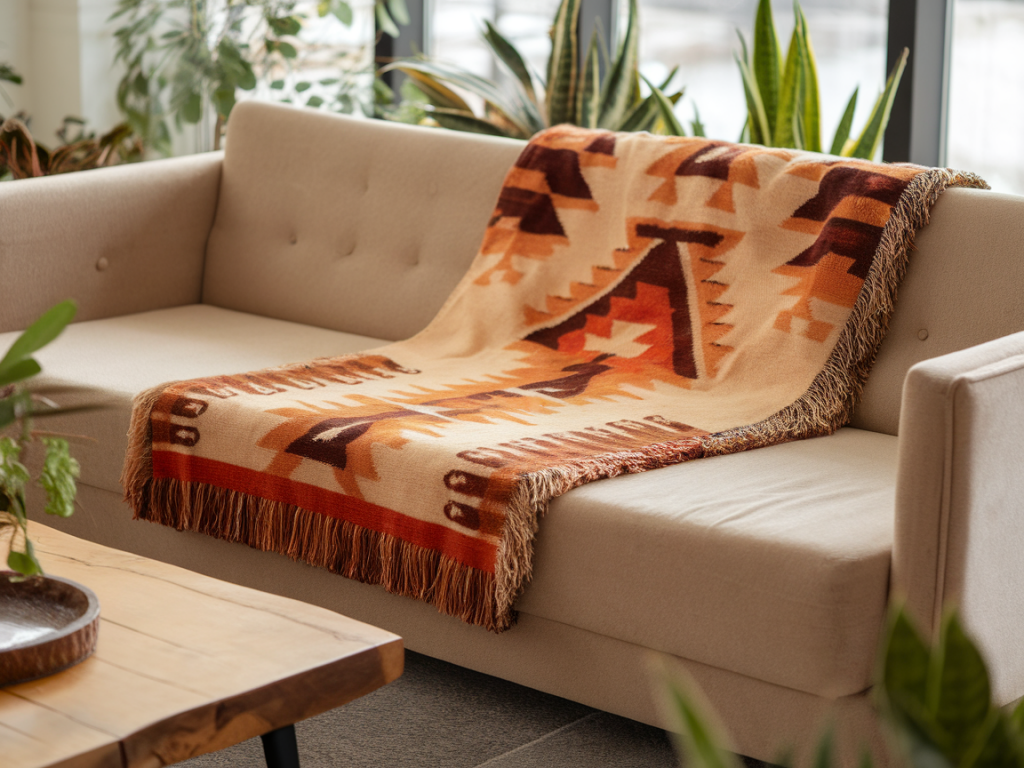
I keep a pile of throws in my living room year-round — not because I can’t decide which one I love most, but because each has a different role depending on the season, the mood, and the room’s texture story. Choosing the right throw is one of those small styling decisions that instantly makes a space feel lived-in and comforting, and yet it’s often overlooked. Here’s how I think about selecting the perfect throw for year-round comfort and style, based on what I look for when curating pieces for Thukthaeshop.
What do I want my throw to do?
Before I even consider color or pattern, I ask myself a few practical questions:
Answering these tells me whether I should prioritize durability, softness, breathability, or washability. For example, a chunky wool throw is dreamy for winter, but in summer I prefer a lightweight cotton or linen blend that breathes.
Material matters — and here’s how I choose
Different fibres behave in different climates and uses. I often keep a few staple materials handy:
| Material | Best for | Care |
|---|---|---|
| Cotton | Everyday, all-season, machine washable | Machine wash cold, tumble low or air dry |
| Linen | Summer, textured look, breathable | Machine wash gentle or hand wash; iron while damp |
| Wool | Winter warmth, insulating, textured | Spot clean or dry clean; some wool can be hand washed |
| Cashmere | Luxury cozy, decorative use | Hand wash cold or dry clean; lay flat to dry |
| Blends/Synthetics | Durable, pet- and kid-friendly | Machine wash, often low maintenance |
Weight and weave: how they influence comfort
When people ask me, “How heavy should a throw be?” I answer with another question: “What will you use it for?” Weight and weave determine warmth and drape.
I also pay attention to the weave: a tight weave retains heat better; an open weave breathes. For a year-round throw I usually choose a medium-weight cotton-linen blend with a slightly open weave for texture.
Color, pattern and texture — how to make it stylish
Throws are one of my favourite ways to add color, pattern or texture without committing to permanent changes. When selecting hues and designs, I think about:
Sometimes I pick a throw in a tone-on-tone shade of an existing color to add interest without competing with other elements in the room.
Care and longevity — the practical side
When someone asks “Will it pill?” or “Can I wash it?” — these are the questions I never ignore. I always read care labels and consider lifestyle. For busy homes, machine-washable cotton or durable blends are non-negotiable. For delicate fibres like cashmere or chunky wool, I accept the extra care if I want that elevated look.
Where to place your throws and how to style them
I seldom fold a throw the same way twice. A casually draped throw slung over the back of a sofa says “come sit,” while a neatly folded pile on an ottoman reads more curated. Here are my favourite styling tips:
Brands and places I like to shop
For pieces I’m happy to feature in Thukthaeshop, I look for makers with thoughtful materials and good finishing. Some brands I often admire (and sometimes include in the shop) are La Ligne for minimalist textures, Brooklinen for high-quality cotton throws, and small European ateliers who hand-weave limited runs. I also source sustainably-minded makers who use natural dyes and traditional techniques — those throws have the kind of character you can’t mass produce.
Final checklist before buying
When I’m ready to purchase, here’s my quick checklist that helps me make a confident choice:
Pick a few trusted throws in different materials and you’ll have flexible options that follow the seasons and your daily needs. A well-chosen throw can uplift a corner, introduce a surprising color, or simply wrap you in comfort — and that’s why I keep a rotation going all year.