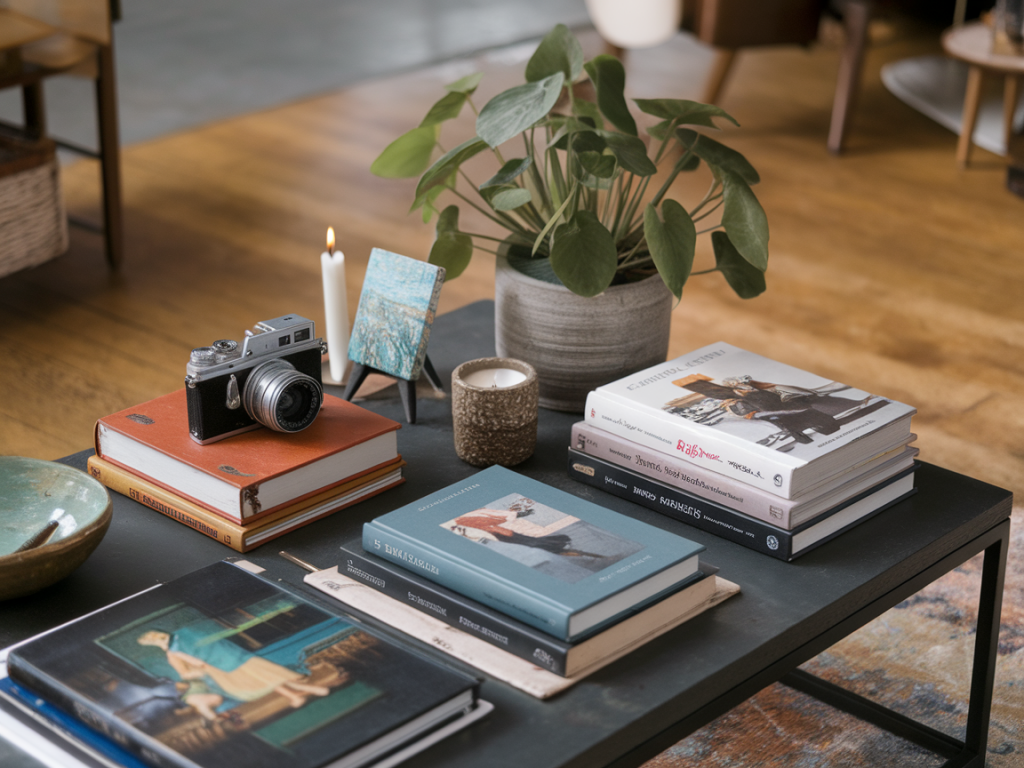
I have always believed that a coffee table is more than a surface to rest a cup — it’s a small stage where memories, travels and everyday rituals come together. When I style a coffee table, I aim for a composition that feels lived-in, intentional and personal: a collection of objects that doesn’t shout for attention but invites a closer look. Below I share my approach, practical tips and styling ideas so you can create a coffee table that truly tells a story.
Start with a simple framework
Before you place anything, take a moment to look at the table and the room. Ask yourself: what is the table’s shape, height and finish? How much traffic does the area get? What mood do you want—cozy, minimal, eclectic? I usually choose a dominant anchor piece, a secondary functional object and two or three smaller accents. That simple framework keeps the arrangement balanced and flexible.
Choose an anchor
The anchor is the piece that sets scale and gives the whole vignette weight. My favourites are a large coffee table book (I stock a few beautiful art and design books in the shop), a shallow ceramic tray or a sculptural object. A book stacked horizontally works beautifully because it also gives height to smaller items. If you prefer a lighter look, a textured runner or small folded throw draped over one corner can act as a soft anchor.
Layer with functional pieces
I love mixing pretty items that are useful. Think a candle on a ceramic dish, a small hand-blown vase with a single stem, or a bowl to catch keys and loose change. Functional objects make the space feel effortless: they belong there because you use them. A beautiful lighter or matchbox tucked beside a candle is a small detail that reads as both practical and curated.
Curate objects that carry meaning
To make a coffee table tell a story, include objects that have a memory or provenance. A small wooden box bought at a market in Portugal, a vintage brass figure picked up during travels, a handmade ceramic coaster from a local maker — those things give the arrangement personality. I often place a postcard or Polaroid leaned casually against a book; the image becomes a conversation starter.
Think in groups and odd numbers
Grouping items in odd numbers (3 or 5) tends to feel more natural than even-numbered pairs. Within each group vary heights, textures and finishes so the eye moves around. For example:
- Group A: oversized photography book (flat) + small stoneware bowl + brass spoon.
- Group B: mid-height vase with a single branch + low concrete candle.
- Group C: framed mini print leaned against a stack of magazines.
Mind the scale and negative space
Scale matters. Tiny objects can get lost on a large table; conversely, oversized pieces overwhelm a small coffee table. Give items room to breathe — negative space is as important as the objects themselves. I like to leave a clear area for cups and magazines; this keeps the table usable and relaxed.
Mix materials and textures
A layered mix of materials — wood, brass, glass, clay, woven fibers — brings depth. I’m partial to combining a matte ceramic with glossy glass and a soft linen napkin. This contrast makes each object more interesting. Add a natural element (a small branch, dried flower or a folded sprig of olive leaves) to soften hard surfaces and introduce color without overwhelming the palette.
Use trays to organize and define zones
Trays are a stylist’s secret. A shallow tray (rattan, brass or ceramic) gathers smaller items and creates a mini still life. It’s practical if you need to clear the table quickly and helps anchor your arrangement. I sometimes use two trays of different shapes to define separate zones — one for drinks and one for decorative pieces.
Play with books and magazines
Books are versatile — they add height, color and content. Choose covers that complement your palette and rotate them seasonally. A stack of three books topped with a small object always reads as intentional. Keep a small selection of current magazines for guests; they make the table feel hospitable.
Objects that invite touch and curiosity
In my styling I include at least one piece that begs to be touched: a smooth stone, a textured wooden puzzle, or a tactile ceramic cup. These invite interaction and make the coffee table feel like a part of daily life instead of a museum display.
Lighting and candles
Candles set mood. A single sculptural candle or a group of tea lights in varied holders creates warmth. Consider a rechargeable lamp or a small task lamp on a side table nearby to cast soft light. For safety, never overcrowd a table with open flames — leave space and use stable candleholders.
Personalize with small art and frames
A small framed photo or miniature artwork leaned casually against a stack of books adds a narrative layer. I prefer simple frames in muted tones so the image itself stands out. Swap the image seasonally to refresh the story your table tells.
Seasonal tweaks and maintenance
Refresh your coffee table with the seasons: woven coasters and a dried floral arrangement in autumn, a small bowl of citrus in winter, fresh herbs or shells in summer. Keep the surface tidy by editing every few weeks—remove items that feel stale and introduce a new find from a weekend market or our shop’s latest arrivals.
Practical safety and usability tips
Always leave enough clear surface for drinks and remote controls. If you have young children or pets, prioritize rounded objects and avoid breakables in the center. Use coasters to protect finishes and choose washable fabrics for textiles near the table.
Styling a coffee table is a tiny creative project with a big impact. Start with a small edit, trust your instincts and let the arrangement evolve. A coffee table that tells a story is one that reflects the way you live — a mix of favourites, functional pieces and a few surprises that spark conversation.