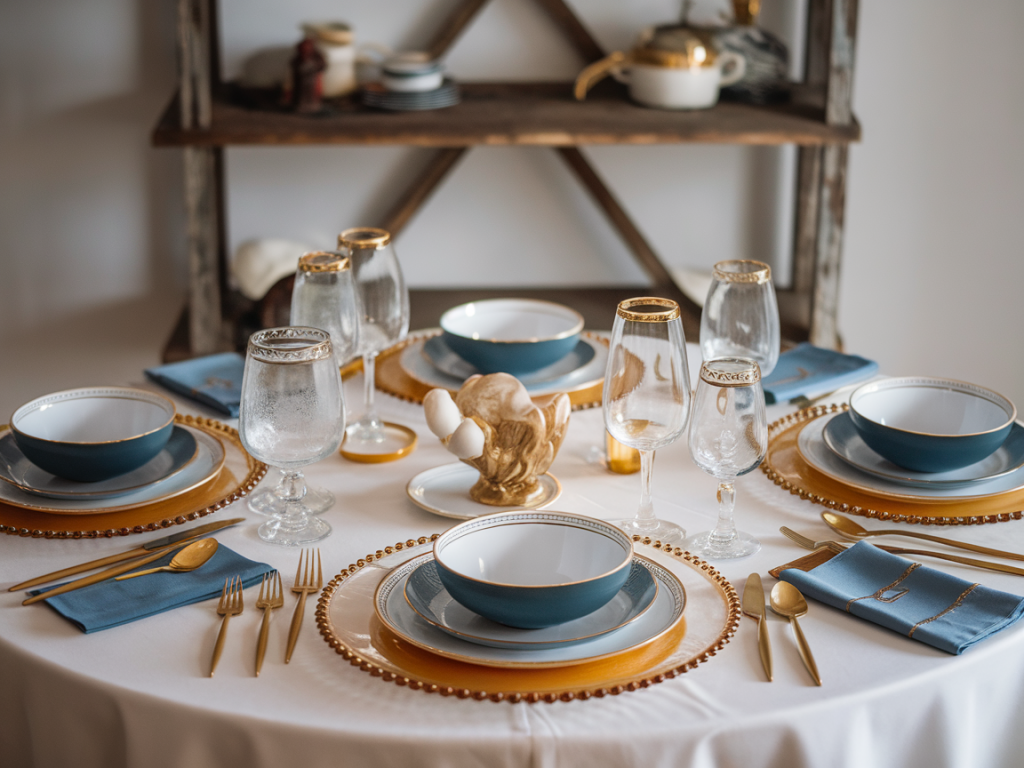
I love a well-set table — it immediately signals care, atmosphere and an invitation to linger. For me, the magic of an at-home dinner party often begins at the place setting. It’s where the practical meets the poetic: practical because every plate, fork and glass has a job; poetic because small details create a mood. Below I share my approach to styling place settings that feel both effortless and memorable, whether you’re hosting a casual weeknight feast or a slower, multi-course dinner.
Start with a vision (mood, color and story)
Before digging through your cabinets, I imagine the overall mood I want to create. Is it a rustic autumn supper with warm earth tones? A light spring lunch with pastels and wildflowers? Or a moody, candlelit dinner with deep blues and matte ceramics? Choosing a palette and a narrative helps every decision feel intentional.
Pick one dominant color, one supporting neutral and one accent. For example: terracotta (dominant), linen (neutral), and olive green (accent). This simple framework keeps the table cohesive without looking too matched.
Layering: the secret to depth
Layering is what makes a table look styled rather than thrown-together. My usual sequence, from base to top, is:
- Table surface (bare wood or a runner)
- Placemat or charger
- Dinner plate
- Salad/appetizer plate or bowl
- Napkin
- Glassware and flatware
- Small finishing touch (name tag, herb sprig, or menu card)
Chargers instantly raise the importance of the meal — they frame your plates and protect the table. I often mix textures: a woven seagrass charger under a smooth porcelain plate creates an attractive contrast. If you don’t have chargers, a folded napkin under the plate can achieve a similar layered feel.
Choose your tableware with intent
When selecting plates, think about shape, color and edge detail. Round plates feel classic and social; square plates read modern. A simple white or off-white dinner plate is incredibly versatile and lets accent plates or bowls shine. Conversely, a statement plate (hand-glazed ceramics, speckled earthenware) can serve as the hero if the rest of the table is understated.
I love mixing a core set with a few unique pieces — perhaps handmade salad plates from a local potter paired with classic white dinner plates. This mix-and-match approach brings personality without appearing chaotic.
Flatware and placement rules that make sense
The formal rules are helpful but don’t be intimidated. A basic, elegant place setting includes:
- Forks to the left (salad fork outside if serving a salad first)
- Knives to the right (blade facing plate)
- Spoons to the right of the knives (if serving soup)
- Dessert fork or spoon placed above the plate or brought in with dessert
For a relaxed dinner, I sometimes place knives and forks on either side of the plate and set dessert utensils on the table only if the dessert needs them. The goal is clarity: guests should be able to find what they need without a hunt.
Glassware: practical and pretty
At minimum, set a water glass and a wine glass. If you’re serving both red and white during the evening, consider adding two wine glasses per setting or decide to use versatile stemware that works for both. Place glasses above the knife, slightly to the right.
If you want to get creative, use mismatched glasses with a unifying trait (all smoked glass, all fluted, same height). This adds character without becoming visually noisy.
Napkins: fold, drape or tie?
Napkins are one of the most impactful yet affordable styling tools. My favorite simple treatments:
- Soft fold: fold the napkin neatly and tuck under the plate for a clean, modern look.
- Drape & tuck: drape the napkin over the plate with one corner tucked under a salad plate for casual elegance.
- Ribbon or twine: tie a small sprig of rosemary or a name tag with twine for a rustic, personal touch.
- Ring or loop: use a simple brass napkin ring for a formal, polished appearance.
Centerpieces and practical placement
Keep centerpieces low so guests can see each other. I prefer long, low arrangements that run along the center (a linen runner with scattered candles and small vases) or a set of evenly spaced bud vases. Candles are essential for atmosphere — mix pillar candles with tea lights and taper candles for texture.
Leave functional space: trays for bread, large bowls or serving platters need to sit comfortably on the table without creating clutter. If your table is small, consider a serving sideboard to hold platters and drinks, freeing the tabletop for place settings and smaller dishes.
Personal details that make it memorable
These small touches often elicit the most delight:
- Name cards — handwritten name cards help guests feel seen and guide seating.
- Menus — a short printed or handwritten menu builds anticipation for the evening.
- Foraging finds — a single olive branch, sprig of eucalyptus or small pinecone at each setting adds seasonal charm.
- A small favor — a tiny jar of jam, a chocolate, or a vial of spice makes the table feel generous.
Lighting and scent
Lighting can elevate the same setting from nice to unforgettable. Dimmable overhead lights are ideal; supplement with candles and a few low table lamps. Avoid strong fragrances in candles that will compete with the food — go for unscented or lightly scented beeswax or soy. If you want an aroma, a simmer pot in the kitchen can gently scent the home before guests arrive (citrus, rosemary and cinnamon for cooler months; lemon and basil for warmer months).
Timing and practical prep
Set the table at least an hour before guests arrive so you can step back and make final tweaks. Keep extra napkins, water, bread and wine within easy reach. I also prepare a simple “service zone” on a side table with a carafe of water, extra glassware, and a waste bowl for shells or peels so guests and hosts can remain relaxed.
Place setting examples
Here are a few quick templates depending on the evening style:
| Occasion | Key pieces | Finishing touch |
|---|---|---|
| Casual dinner | Plate, bowl, water glass, wine glass, fork/knife | Folded napkin under bowl + sprig of herb |
| Multi-course dinner | Charger, dinner plate, salad plate, soup bowl, 2 forks, knife, soup spoon, 2 glasses | Printed menu + name card |
| Brunch or lunch | Plate, side plate, coffee cup, water glass, fork/knife | Fresh fruit or small jar favor |
Small mistakes to avoid
- Overcrowding the table with tall decorations — they block conversation.
- Ignoring the flow of service — ensure platters can be passed easily and clearing plates is doable.
- Using too many competing patterns — balance is key: if plates are patterned, keep linens simple.
- Forgetting dietary considerations — a small note at each setting indicating allergens or a vegetarian option can be thoughtful.
Finally, remember that a memorable table is about warmth more than perfection. Imperfect handmade ceramics, a slightly crooked name card, or a candle that’s burned down a little all tell a story and make the evening feel lived-in. I love sourcing unique tableware and little accents at Thukthaeshop that help create those layered, personal tablescapes — pieces that guests will ask about and that you’ll enjoy for many meals to come.