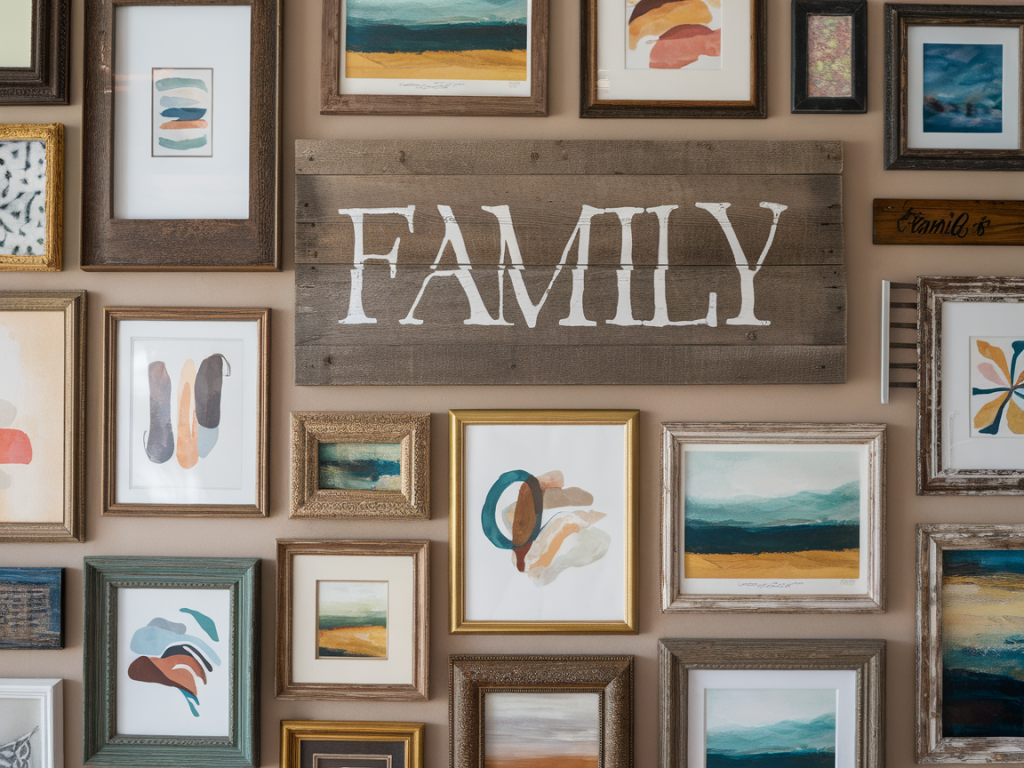
I love a good gallery wall. It’s one of my favourite ways to bring personality into a room and to tell a story with objects I truly care about. Over the years curating pieces for Thukthaeshop, I’ve developed a practical approach that keeps the process enjoyable — not daunting — and ensures the final result looks intentional rather than cluttered. Below I share my step-by-step styling tips to create a gallery wall using curated pieces from Thukthaeshop, plus some small tricks I use when I’m styling a client’s home or my own.
Start with a mood and a loose theme
Before drilling a single hole, I take a moment to decide what mood I want the wall to convey. Do I want calm and minimalist, warm and eclectic, or bold and graphic? A clear mood helps narrow choices from Thukthaeshop’s range — whether that’s earthy ceramic plates, botanical prints, hand-dyed textiles or brass-framed mirrors. I rarely stick to a rigid rule; instead I choose a dominant thread (a colour palette, a material like rattan, or a recurring motif) and allow for one or two contrasting accents to keep the composition lively.
Choose a focal anchor
Every successful gallery wall has an anchor piece — something that draws the eye first and sets the scale. This could be a large framed artwork, a round mirror, a woven tapestry or a sculptural wall vase from Thukthaeshop. Place the anchor slightly off-centre if you want a modern, relaxed look, or dead-centre for a more classical layout. Once the anchor is chosen, everything else is arranged around it to support and enhance it.
Mix scales, shapes and textures
Variety is what makes a gallery wall feel curated rather than repetitive. I aim for a pleasing mix of sizes and shapes:
Using items from different categories on Thukthaeshop (Wall Art, Textiles, Home Decor) helps achieve that layered look. Keep an eye on the balance of heavy vs. light visual weight: two small dark pieces together might feel heavier than one medium light piece.
Create a layout before you hang
I can’t overstate how much time a good mock-up saves. There are three methods I use:
For spacing, I usually leave 5–10cm between frames for a tight, cohesive look, or 12–20cm for a breezier, gallery-browsing feel. Trust your eye: if the composition reads well from 2–3 metres away, you’re on the right track.
Think about alignment and visual lines
There are a few alignment tricks I use regularly:
I like mixing alignment strategies: for example, a row of smaller prints aligned by their bottoms under a larger central artwork creates a dynamic interplay of lines.
Layer with three-dimensional pieces
Adding 3D elements makes the wall feel lived-in. Consider:
When you introduce dimensional objects, be mindful of how far they protrude — leave enough clearance for cleaning and to avoid collisions in busy areas like halls.
Choose frames and mats with purpose
Frames and mats are the quiet heroes. I often restrict the frame palette to two finishes (for example, natural oak and matte black) to keep cohesion. White mats can give prints breathing space; for smaller works I sometimes skip the mat to keep energy tight. Thukthaeshop’s curated collection includes simple oak frames and subtler linen-wrapped frames that work across styles.
Lighting matters more than you think
Light transforms art. If possible, place the gallery wall where it benefits from natural daylight, but avoid direct harsh sun which can fade artworks. For evenings, I use directional LED picture lights, angled recessed spots, or plug-in wall lamps to create pools of light. Warm bulbs (2700–3000K) are generally flattering and make colours feel inviting.
Hanging day: tools and practical tips
On hanging day I come prepared. Essentials in my pouch:
For heavier pieces use wall anchors or screws into studs. For lighter frames a quality picture hook is often sufficient. Hang items slightly lower than you think — eye level is commonly recommended at 150cm for the centre of art in living spaces, but adjust based on the sofa or furniture nearby.
Finishing touches and ongoing curation
When the wall is up, step away with a glass of wine and live with it for a few days. I often tweak spacing, swap a print for better contrast, or add a small sculptural object. Gallery walls are meant to evolve: a new print from Thukthaeshop, a piece collected while travelling, or a seasonal textile can keep the composition fresh.
If you’re unsure where to start, pick one corner of your home and build a mini gallery — it’s less intimidating and equally impactful. And if you want specific pairings or help choosing an anchor piece, I’m happy to offer suggestions from the Thukthaeshop collection — just reach out through the contact page. Happy hanging!