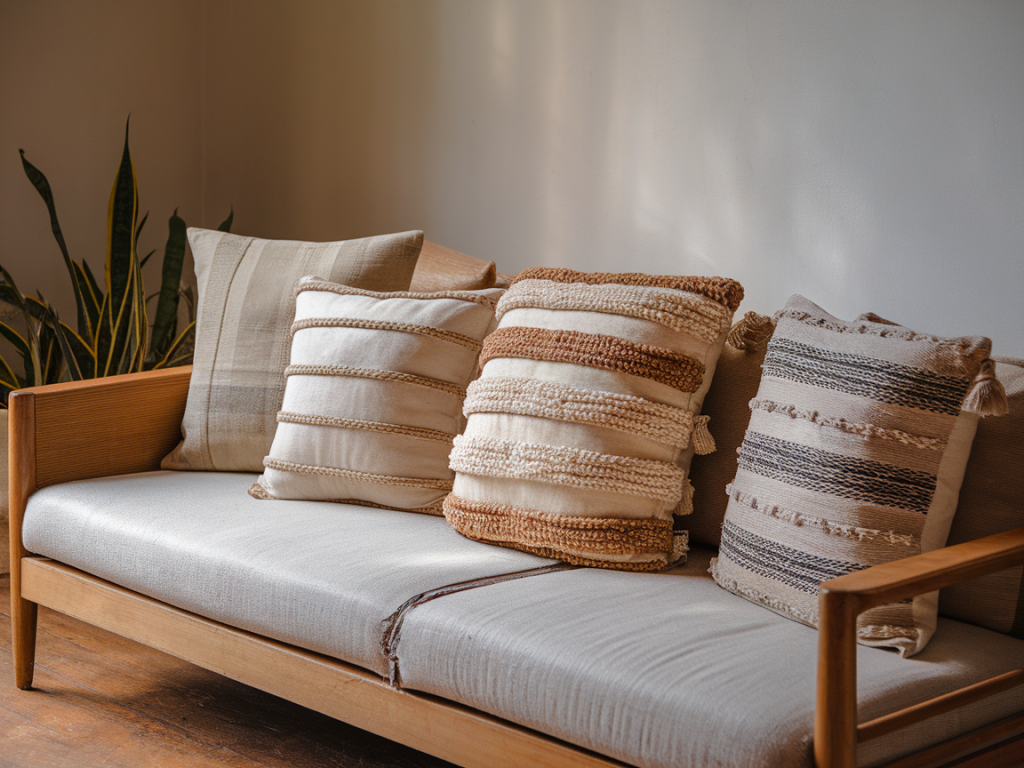
I often think of cushions as the finishing brushstroke for a sofa — the small, tactile details that instantly make a seating area feel lived-in and inviting. Over the years of curating textiles for Thukthaeshop, I've tested countless handwoven cushions and learned which approaches reliably bring texture, warmth and personality to a sofa. Below I share five practical ways I use handwoven cushions to transform a plain couch into a cozy, layered haven.
Mix textures, not just patterns
When I stage a sofa, my first focus is texture. A handwoven cushion — whether made from chunky wool, slubby linen, or a tightly woven cotton ikat — brings a physical presence that printed cushions alone can't match. I like pairing a smooth leather or velvet cushion with a more rugged handwoven piece to create contrast. The rougher weave catches light differently and invites touch, which makes the whole arrangement feel tactile and warm.
Practical tip: place a soft velvet cushion against the armrest and add a handwoven cushion with visible slubs or fringe next to it. The juxtaposition of soft and textured materials draws the eye and signals comfort.
Play with scale and proportion
Handwoven cushions come in a variety of sizes, and I use that to build depth. A large 60 x 60 cm floor-cushion-style piece anchored at the sofa corner creates a relaxed, loungey look. Then I layer smaller 45 x 45 cm and lumbar cushions in front for a graduated effect. The different scales create a sense of abundance without clutter.
Pro tip: keep one unifying element — a shared color or tonal family — so that the different sizes feel cohesive. For example, a chunky handwoven cushion in oatmeal and a smaller striped handwoven lumbar in warm grey and cream will read as an intentional set.
Use handwoven cushions to introduce a color story
Sometimes a sofa needs a subtle update rather than a full reupholster. I use handwoven cushions to introduce new accent colors or to soften an existing palette. Because many handwoven textiles are made with natural dyes and intentional irregularities, they add depth to a color scheme in a way that mass-produced cushions often can't.
How I do it: if your sofa is navy, I’ll add a couple of cushions with warm terracotta or mustard threads woven through a neutral base. The colors feel integrated rather than jarring because they come through in the weave rather than as a flat print. At Thukthaeshop you'll find hand-dyed pieces that work beautifully for this — they add warmth without overpowering the sofa's main hue.
Layer patterns thoughtfully with solids
Handwoven cushions often have subtle, geometric or ikat-inspired patterns. When I layer patterns, I follow a simple rule: pair one dominant patterned handwoven cushion with supporting solids or very subtle textures. That way the patterned piece becomes a focal point and the eye has breathing room.
- Anchor piece: a bold handwoven cushion with a distinctive motif.
- Support pieces: one or two solid handwoven cushions in complementary tones.
- Final touch: a small patterned lumbar or a cushion with fringe for detail.
Example: a handwoven cushion with a bold diamond pattern in black and beige looks stunning when backed by two warm beige handwoven cushions and a small black lumbar. The result is layered but not chaotic.
Use texture to define function and mood
Beyond aesthetics, I think about how cushions affect how people sit and relax. A firm, tightly woven cushion can be supportive and useful for upright seating; a soft, padded handwoven cushion with a bit of loft invites lounging. By mixing different handwoven constructions, you can create zones on your sofa — a supportive reading spot, a soft lounging corner, and a casual armrest cushion.
For hosting, I often move a couple of firmer handwoven cushions closer together to make conversation-friendly back support. For movie nights, I swap in plush, looser-woven cushions and add a chunky throw blanket that echoes the cushion textures.
Bonus: Practical care and styling advice
Handwoven cushions are beautiful but they do require some thought when it comes to care. I always recommend checking the maker's instructions — many pieces are spot-clean only, while others can handle gentle hand washing. I favor removable covers for everyday sofas: you get the artisanal look but with the practicality of being able to wash them.
Quick care tips I share with customers and friends:
- Rotate cushions regularly to prevent uneven wear and maintain loft.
- Brush off crumbs and dust with a soft brush or vacuum using an upholstery attachment on low suction.
- For natural dyes, avoid prolonged direct sunlight to prevent fading.
- If a cushion has fringe, tuck it gently when not in use to reduce snagging.
| Weave Type | Feel | Best Use |
|---|---|---|
| Chunky Wool | Plush, tactile | Cozy lounging, winter seasons |
| Slubby Linen | Textured, breezy | All-year living rooms, relaxed modern homes |
| Ikat / Hand-dyed Cotton | Soft but structured | Color accents, patterned focal cushions |
| Tightly Woven Cotton | Durable, supportive | Everyday sofas, pet-friendly homes |
Styling combinations I love
Here are a few combinations I return to again and again in my own home and in shoots:
- A warm wool pillow with a neutral kasuri ikat lumbar and a small leather bolstering pillow — perfect for a masculine yet cozy look.
- Two slubby linen cushions in different tones of sand with a handwoven mustard accent cushion — soft, layered neutrals with a touch of color.
- A bold geometric handwoven cushion paired with muted velvet cushions — pattern-forward but still elegant.
Every time I add or swap a handwoven cushion, the sofa's personality shifts. It's an affordable, low-commitment way to refresh a room across seasons. If you’d like suggestions tailored to your sofa, fabrics or color preferences, I’m always happy to help — you can find me at Thukthaeshop (https://www.thukthaeshop.com) where I curate a selection of handwoven cushions and textiles chosen for their craftsmanship and character.