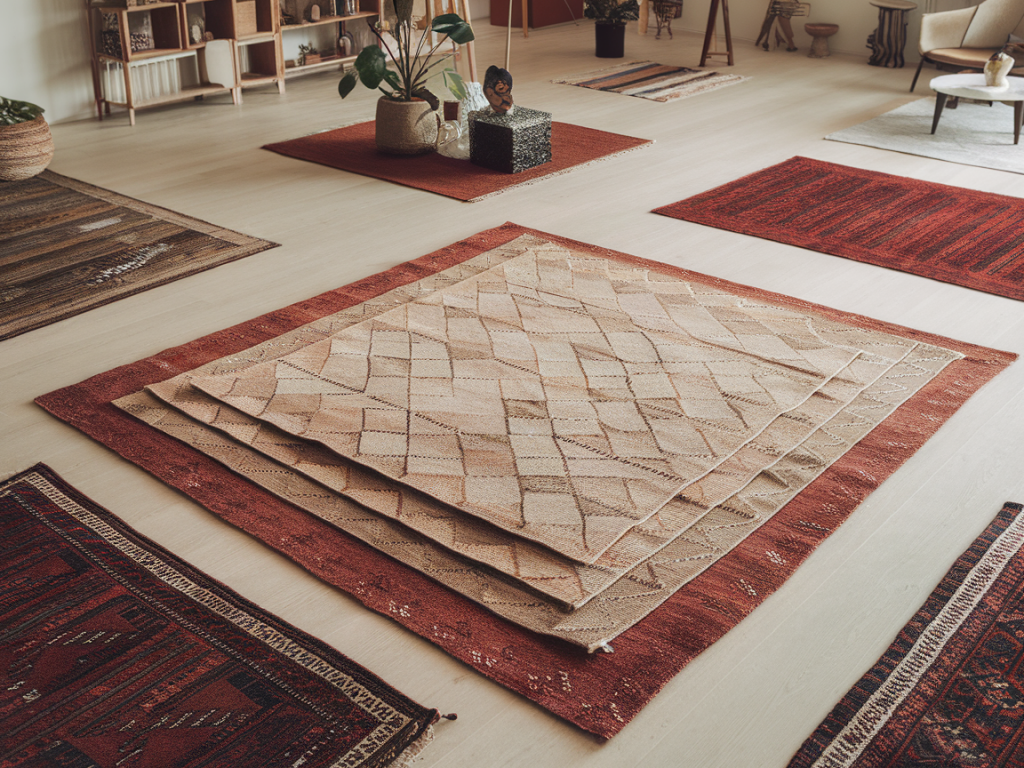
I love the way rugs can transform an open-plan space — they anchor seating areas, add warmth underfoot, and create visual rhythm across a large room. Over the years of styling homes and sourcing textiles for Thukthaeshop, I’ve learned that layering rugs is one of the easiest ways to bring depth, texture and comfort to an open-plan layout without overwhelming the space. Below I share practical, hands-on advice from my experience: how to choose sizes, combine textures and patterns, solve common problems and pull everything together so your room feels intentional and lived-in.
Why layer rugs in an open-plan space?
Open-plan living can feel airy but also a little unmoored — there are no walls to define zones. Layering rugs helps you:
Start with a plan: map your zones
Before bringing rugs into the room, I sketch a quick floor plan (even a rough one). For each zone I note the furniture footprint and leave space for circulation. Key rule: rugs should be large enough to sit under main furniture legs for a grounded look. For example:
Choose your base rug carefully
The base rug is the foundation. In an open-plan room I often choose a large, neutral base rug — think natural wool, jute, or a low-pile flatweave — because it covers more floor, visually unifies the space, and handles traffic well. Here’s what I look for:
Layering rugs on top: mixing textures and patterns
This is where the fun begins. I always think about contrast — not clash. A good layered combination balances:
For example, pairing a large neutral wool base with a smaller Moroccan-style shag or a kilim runner creates interest without overwhelming the senses.
Practical sizing guide (quick reference)
| Area | Base rug | Top rug |
|---|---|---|
| Sofa seating | Large rug covering sofa + coffee table + at least front legs (e.g. 250x350 cm) | Layer a smaller plush rug (160x230 cm) centered under coffee table |
| Dining area | Large rug under table extending 60–80 cm beyond chairs (e.g. 240x330 cm) | Optional runner or small central rug to define buffet or serving area |
| Entry / hallway | Long runner as base | Short runner or decorative rug near door |
Anchoring furniture when layering
I prefer anchor points. Place the layered rug so that the coffee table or sofa sits on the upper layer. If you’re layering a small rug partially on a larger one, keep it aligned with the furniture — e.g., centered under the coffee table or pushed under the front legs of an armchair. This makes the arrangement intentional rather than accidental.
Colour and cohesion tips
To keep an open-plan space feeling cohesive:
Fixing slipping and trip hazards
Layered rugs can shift. I always use a quality non-slip rug pad under both layers. For the top rug, either use a thin pad or double-sided rug tape at the corners if placed in a high-traffic path. Avoid overly thick pads under a top rug that sits partly on hard floor — it can create an uneven seam and a trip hazard.
Styling examples from my sourcing work
Some combinations I return to often:
What to avoid
A few common mistakes I see:
Care and maintenance
Layering actually helps preserve rugs — the base takes most traffic and dirt. Rotate the top rug periodically to even wear, vacuum both layers (lift the top rug to reach the base), and address spills immediately. For delicate vintage pieces, professional cleaning is worth it; for flatweaves, a good shake outdoors or a gentle vacuuming usually does the trick.
Final styling nudges
When I’m visiting a client’s open-plan home, I often move rugs around until the proportions feel right — don’t be afraid to experiment. Try shifting a top rug slightly off-center, or remove it to see how the space breathes; sometimes less is more. Layering is about adding personality and comfort while keeping a visual thread that ties the plan together.
If you want, send a photo of your space and I can suggest specific sizes and pairings — I love matching textures and patterns to a room’s mood and your personal style.